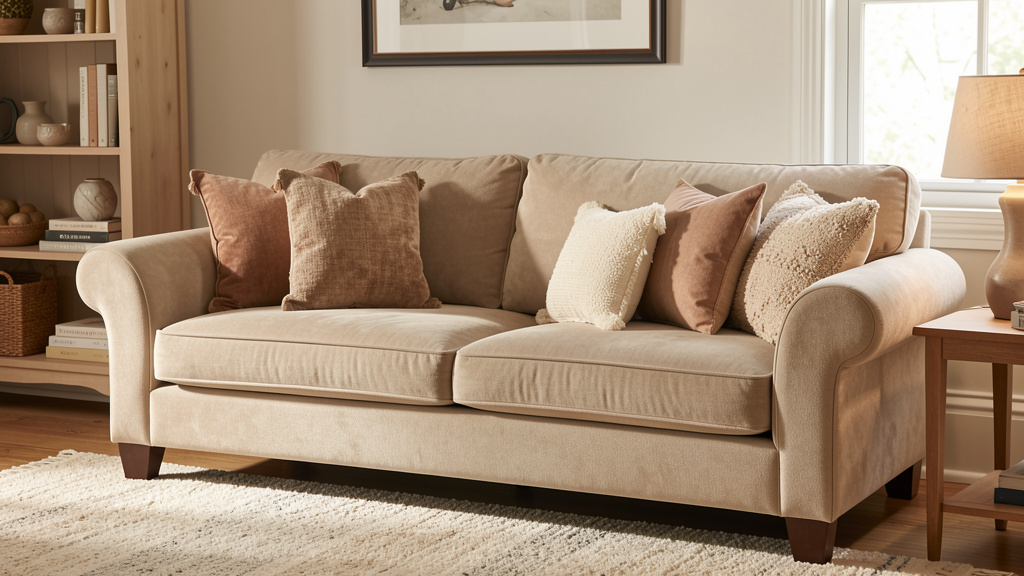
Move beyond guesswork with a systematic approach to sofa selection—grounded in spatial principles, ergonomic considerations, material science, and real-world household dynamics.
Selecting a sofa represents a meaningful investment in your home’s comfort, function, and visual harmony. Many encounter frustration: delivery complications from overlooked dimensions, cushions that lose support prematurely, or a piece that feels misaligned with daily living. This guide offers a structured methodology to navigate these challenges. By focusing on measurable criteria—from doorway logistics to cushion composition—you can make a choice better aligned with how you actually live. Guidance is presented as observed patterns across furniture selection journeys, spatial planning principles, and material performance standards—not as absolute guarantees, but as actionable considerations to inform your decision.
Introduction
Showrooms present an array of silhouettes: deep sectionals promising relaxation, tailored mid-century profiles suggesting modern ease, traditional styles evoking timeless warmth. Beneath aesthetics lies a convergence of structural design, material behavior, and human interaction that influences long-term satisfaction. Common friction points emerge repeatedly across buyer experiences: spatial mismatches disrupting room flow or delivery access; ergonomic disconnects leading to discomfort during extended use; and durability gaps between expectations and real-world wear under household conditions. This framework addresses these areas systematically. It shifts focus from fleeting visual appeal to foundational compatibility—starting with your specific context: doorway dimensions, natural seated posture, household activity patterns. When selection criteria reflect lived reality, confidence grows. Observed patterns suggest the most enduring sofa choices aren’t defined by price or trend alone, but by thoughtful alignment with the human and spatial environment they inhabit.
The 5-Pillar Sofa Selection Framework
Rather than browsing endlessly or relying on a single showroom visit, confidence emerges through sequential evaluation across five interconnected dimensions. Each pillar addresses a distinct aspect of compatibility. Skipping one risks misalignment—like selecting a vehicle based solely on color while overlooking seating comfort or cargo needs. This framework translates subjective terms (“comfortable,” “durable”) into observable, actionable criteria. Proceed through each pillar deliberately. Take measurements. Note constraints. This process builds clarity before style becomes the focal point.
Pillar 1: The Spatial Blueprint
Spatial planning forms the essential foundation. A visually appealing sofa loses value if it obstructs movement, blocks light, or cannot enter your home. This pillar moves beyond basic room measurement to a holistic spatial strategy.
Why This Step Matters
Spatial mismatches frequently contribute to delivery complications, returns, or ongoing room imbalance. A sofa slightly too large disrupts traffic flow and visual harmony; one too small may leave a space feeling unresolved. Precision here supports smoother logistics and a room where furniture enhances—not competes with—daily movement.
Executing the Spatial Blueprint
Step 1: Document Room Dimensions Accurately
Use a rigid metal tape measure. Record floor-to-ceiling height (critical for tall-back styles), window sill heights, radiator placements, electrical outlets, and architectural features like moldings or built-ins. Sketch a simple floor plan on graph paper (1 square = 1 foot) or use a free app like MagicPlan. Include permanent fixtures: fireplaces, consoles, bookshelves. Photograph the space from multiple angles.
Step 2: Define Functional Clearances
– Traffic Pathways: Maintain 30–36 inches of clear space in front of the sofa for comfortable walking. For rooms with cross-traffic (e.g., hallways passing through), aim for 42+ inches.
– Conversation Distance: Position primary seating 7–10 feet apart to support natural dialogue.
– Viewing Distance: For television use, sit approximately 1.5x the screen’s diagonal measurement away (e.g., 9 feet for a 72-inch screen).
– Door Swing Radius: Measure the arc of every door opening into the room. Ensure no sofa component intrudes into this path.
Step 3: Verify Entry Logistics Thoroughly
Measure every potential access point:
– Doorway Width: Standard interior doors range 28–32 inches. Temporarily removing doorstops may add clearance.
– Hallway Widths & Turns: Note narrow corridors, stair landings, or tight corners.
– Elevator/Stair Constraints: For multi-story dwellings, confirm elevator interior dimensions or stairwell width.
– Alternative Entry Points: For ground-floor units, assess whether window access (with screens removed) offers a viable path.
Practical Validation: Create a full-scale cardboard outline of the sofa’s footprint (length × depth). Tape it to the floor. Walk around it. Sit where the sofa would be. Does movement feel intuitive? Does it block light, views, or access to other areas? This physical simulation reveals spatial dynamics digital tools may miss.
Common Pitfalls to Consider
– Measuring Floor Area Only: Ignoring ceiling height can lead to visual crowding. Rooms with ceilings under 8 feet often pair better with sofas under 32 inches tall.
– Overlooking Rug Placement: Standard practice places front sofa legs on the area rug. Factor rug size into spatial planning to avoid a disconnected look.
– Confusing Size With Scale: A narrow 84-inch sofa may fit dimensionally in a compact room but feel visually heavy with bulky arms. In tighter spaces, low-profile arms and slender legs often enhance perceived openness.
– Neglecting Future Flexibility: Will additional seating (e.g., an armchair) be added later? Preserve adaptable space.
Illustrative Scenario
A compact urban studio: A resident loved a 96-inch sectional online but lived in a 650 sq ft space with a 29-inch doorway and a narrow hallway requiring a 90-degree turn. Using the Spatial Blueprint:
1. Measured the hallway turn clearance—only 31 inches available.
2. Calculated traffic flow: placement would leave just 24 inches of pathway, below recommended clearance.
3. Tested a cardboard outline; movement felt restricted.
Adaptation: Selected a 78-inch apartment-scale sofa with tapered legs (reducing visual weight) and a reversible chaise positioned within the room’s footprint without blocking the kitchen path. Delivery proceeded smoothly, and the room maintained balanced proportions.
Adaptive Strategies for Challenging Layouts
– Studio Apartments: Prioritize dual-function pieces (storage bases, sleeper mechanisms). A loveseat (54–68 inches) paired with two accent chairs often offers flexible seating without overwhelming the space.
– Long, Narrow Rooms: Float the sofa slightly away from the wall. Position it perpendicular to the room’s length to break linear sightlines. Opt for narrow-depth models (32–35 inches) to preserve walking space.
– Open-Concept Areas: Use the sofa to define zones. Place it back-to-back with a console table facing the dining area. Ensure the sofa back is fully upholstered if visible from adjacent spaces.
– Rooms With Radiators: Maintain 6+ inches between radiator and sofa back for heat circulation and fabric safety. Low-back styles may be preferable if radiators sit high on walls.
Guiding Insight: A sofa’s contribution to a room is measured not only by its presence, but by the quality of space it enables around it.
Having established spatial parameters, the next consideration is how the sofa aligns with your body’s unique requirements—leading us to Pillar 2: The Body-Alignment Protocol.
Pillar 2: The Body-Alignment Protocol
Comfort is deeply personal and biomechanically specific. What feels supportive to one person may cause strain for another. This pillar moves beyond subjective descriptors (“firm,” “soft”) to align dimensions with individual physiology and habitual postures. Ergonomic mismatch often manifests subtly—through lower back fatigue after extended sitting or the unconscious habit of perching on a seat’s edge.
Why This Step Matters
Human proportions vary significantly in height, limb length, and spinal curvature. While industry references (such as BIFMA guidelines) offer baseline ranges, personal comfort depends on how dimensions interact with your frame. Seat depth too deep may cause shorter individuals to slump; too shallow may leave taller users with unsupported thighs. This protocol provides a method to identify alignment cues relevant to your body.
Executing the Body-Alignment Protocol
Step 1: Determine Personal Seat Depth
Sit upright against a wall. Have someone measure from the back of your knee (popliteal fold) to the back of your buttocks. This indicates your ideal seat depth range:
– Under 20 inches: Shallow seats (18–21 inches deep) often suit petite frames (<5’4″) or upright sitters.
– 20–23 inches: Standard depths (21–24 inches) typically accommodate average heights (5’4″–5’10”).
– Over 23 inches: Deep seats (24–28+ inches) generally benefit taller individuals (>5’10”) or those who lounge with legs extended.
Step 2: Evaluate Seat Height
Measure from floor to top of uncompressed cushion:
– 16–18 inches: Often comfortable for shorter individuals; feet rest flat naturally.
– 18–20 inches: A versatile range suitable for many body types.
– 20+ inches: May better support taller users, preventing knees from rising above hip level.
Test cue: When seated, thighs should be near-parallel to the floor. Knees ideally form a 90–110 degree angle. Dangling feet or elevated knees suggest misalignment.
Step 3: Assess Back Height & Support Placement
– Low Back (under 28 inches): Supports lumbar region only. Suited for lounging postures, modern aesthetics, or sightline considerations (e.g., viewing TV over the back).
– Medium Back (28–32 inches): Supports lumbar and mid-back. Adaptable for varied sitting positions.
– High Back (32+ inches): Offers full spinal support. Often preferred for upright sitting, traditional styles, or specific comfort needs.
Critical check: When seated upright, the backrest should contact the natural inward curve of your lower spine (approximately belt-line height). Support positioned too high or low may not alleviate strain effectively.
Step 4: Consider Arm Height & Function
Measure from seat cushion to top of armrest:
– Low Arms (under 24 inches): Streamlined profile; easier entry/exit. Less support for reading or resting head.
– Standard Arms (24–27 inches): Comfortable elbow support; compatible with most coffee tables.
– High Arms (27+ inches): Pillow-like support for neck/head; suited for deep relaxation.
Test cue: Rest elbows lightly. Shoulders should remain relaxed, not hunched or stretched. Arms should allow comfortable use of adjacent surfaces.
Common Considerations
– Test Seated, Not Standing: Sit deeply during evaluation. Shift positions: upright, reclined, legs crossed. Note pressure points after 2+ minutes.
– Account for Sitting Duration: Frequent extended viewing sessions may benefit from deeper seats with lumbar support; brief use may suit firmer, upright profiles.
– Observe Cushion Settlement: High-resilience foam typically compresses 15–25% under body weight. Sit on display models long enough to feel the settled depth.
– Support ≠ Firmness: A very hard seat may create pressure points. Effective support often comes from even weight distribution. Layered constructions (e.g., foam core wrapped in fiber) can offer balanced comfort.
Illustrative Scenario
Addressing seated discomfort: An individual (6’2″) experienced lower back fatigue with a sofa featuring 20-inch seat depth and a 26-inch back height. Using the protocol:
1. Personal seat depth measurement indicated ~25 inches needed for thigh support.
2. Seat height of 17 inches positioned knees above hips.
3. Back height ended below the natural lumbar curve.
Adaptation: Selected a sofa with 26-inch seat depth, 19-inch seat height, and a 34-inch back featuring an adjustable lumbar pillow. Discomfort diminished as seating dimensions aligned with biomechanics.
Tailored Considerations
– Petite Frames (<5’3″): Seek “apartment-scale” options with seat depths under 21 inches. Tapered legs enhance visual lightness.
– Taller Frames (>6′): Prioritize seat depth exceeding 24 inches. Verify chaise length accommodates full leg extension (ideally 65+ inches).
– Mobility Considerations: Seat heights of 19–21 inches may ease standing transitions. Firm, resilient cushions provide stable push-off support. Avoid excessively deep seats requiring significant effort to exit.
– Temporary Physical Needs (e.g., recovery periods): Slightly higher seats (19+ inches) and medium-firm cushions can reduce strain. Wide arms offer leverage points. Consult healthcare providers for personalized guidance.
Understanding Cushion Construction: The Comfort Foundation
Cushions significantly influence both initial feel and long-term performance. Core types include:
| Cushion Type | Typical Composition | Feel Profile | Common Applications | Longevity Notes |
|---|---|---|---|---|
| High-Resilience (HR) Foam | Solid polyurethane foam (1.8–2.5+ lb density) | Supportive, recovers shape quickly | Daily-use seating, upright postures | Higher density (2.0+ lb) generally correlates with longer resilience. Avoid densities below 1.8 lb for primary seating. |
| Down-Wrapped Foam | HR foam core wrapped in down/feather blend | Plush initial feel, molds to body, requires fluffing | Relaxed lounging, living rooms with moderate use | Down shifts over time; weekly fluffing maintains appearance. Foam core preserves underlying support. |
| Spring Down | Sinuous springs topped with down/feather | Soft sink, classic “cloud” sensation | Traditional styles, lower-traffic rooms | Down compacts; springs may develop noise. Requires regular maintenance. |
| Memory Foam | Viscoelastic polyurethane | Contours precisely, slow rebound | Pressure relief focus, sleeper sofa mattresses | Retains heat for some users. Often used as a thin top layer over HR foam. |
| Fiber Fill | Polyester batting | Very soft initially, flattens rapidly | Decorative pillows, budget accent pieces | Typically loses loft within 1–3 years. Not recommended for main seat cushions in high-use areas. |
Key Insight: Foam density (pounds per cubic foot) is a more reliable indicator of durability than subjective “firmness” labels. For primary seat cushions:
– <1.5 lb: Budget grade; prone to rapid flattening.
– 1.8–2.0 lb: Good residential standard; balances comfort and resilience.
– 2.2–2.5+ lb: Premium grade; exceptional shape retention under frequent use.
When possible, inquire about density specifications. Reputable manufacturers typically disclose this information.
With comfort parameters defined, attention turns to ensuring the sofa withstands your household’s specific rhythms and demands—introducing Pillar 3: The Lifestyle Durability Matrix.
Pillar 3: The Lifestyle Durability Matrix
Durability is contextual. A sofa must align with your actual living patterns—not an idealized version. This pillar matches material properties and construction details to documented household realities: pet activity, sunlight exposure, usage frequency, and maintenance capacity.
Why This Step Matters
Terms like “performance fabric” or “family-friendly” lack universal standards. Without understanding material science and construction methods, expectations may not match reality—such as a delicate fabric in a sun-drenched room or a frame stressed by frequent use. This matrix translates abstract durability into concrete, situation-aware criteria to support informed choices.
Executing the Lifestyle Durability Matrix
Step 1: Conduct a Household Reality Audit
Reflect honestly on:
– Traffic Volume: Typical daily users (Light: 1–2; Moderate: 3–4; Heavy: 5+)
– Pet Presence: Species, size, behaviors (clawing, shedding, accidents)
– Child Factors: Ages, common activities (snacking, crafts, climbing)
– Usage Patterns: Daily relaxation hub vs. occasional entertaining
– Environmental Factors: Direct sunlight duration, proximity to kitchen (grease/oil exposure), humidity levels
Step 2: Decode Fabric Performance Metrics
Fabric is the first line of defense. Key indicators include:
– Abrasion Resistance (Double Rubs): Measured via Wyzenbeek test. Indicates resistance to surface wear.
– Under 15,000: Decorative weight; suited for low-traffic adult spaces.
– 15,000–30,000: General household use; appropriate for moderate activity.
– 30,000–50,000+: Heavy-duty; ideal for active households, pets, high-use zones.
– Stain Resistance: Solution-dyed fabrics (color embedded in fiber during production) offer permanent resistance. Topical treatments wear off over time.
– Cleanability Code:
– W: Water-based cleaners safe.
– S: Solvent cleaners only (water may cause staining).
– WS: Either water or solvent cleaners acceptable.
– X: Vacuum or dry brush only; avoid liquids.
Fabric Guidance by Household Profile:
– Active Households With Young Children:
– Recommended: Performance microfibers (e.g., Revolution, Crypton). Solution-dyed for inherent stain resistance. 50,000+ double rubs. W or WS code. Repels common spills.
– Budget-Conscious Alternative: Tightly woven polyester blends (verify >30,000 double rubs). Medium or dark tones mask minor marks.
– Generally Less Suitable: Velvet (shows impressions), linen (prone to staining), loose weaves.
– Pet Owners:
– Recommended: Crypton Home fabric. Moisture barrier helps prevent liquid penetration. Resists snagging. 100,000+ double rubs.
– For Shedding Pets: Medium-tone heathered fabrics camouflage hair better than solids. Tight weaves reduce fur embedding.
– Caution: Avoid bouclé, chenille, or light-colored velvet where claws may catch or marks show readily.
– Supportive Practice: Keep a lint roller accessible. Some fabrics feature anti-static properties to minimize clinging hair.
– Sun-Exposed Rooms:
– Recommended: Solution-dyed acrylics (e.g., Sunbrella Indoor). Colorfastness resists fading under UV exposure.
– Generally Less Suitable: Silk, standard cotton, undyed linen—these may show noticeable fading within 1–2 years of direct sun.
– Formal or Low-Traffic Spaces:
– Opportunity for Texture: Genuine velvet (cotton/rayon), bouclé, or delicate linen blends. Prioritize aesthetics where wear is minimal.
– Maintenance Note: Gentle vacuuming with brush attachment weekly. Rotate cushions regularly to prevent uneven wear.
Step 3: Evaluate Frame and Suspension Integrity
Visible fabric depends on invisible structure. Prioritize these construction elements:
– Frame Material:
– Kiln-Dried Hardwood (Maple, Oak, Birch): Widely regarded as a durable standard. Resists warping. Joints reinforced with dowels, corner blocks, and adhesive.
– Engineered Hardwood: Acceptable when certified (e.g., CARB-compliant). Verify stress points avoid softwoods like pine.
– Generally Less Suitable: Particleboard, MDF, or plastic frames—these may flex, crack, or loosen under repeated stress.
– Joint Construction:
– Look For: “Double-doweled and glued” or “mortise-and-tenon” joints. Corner blocks secured with screws.
– Caution: Staples or nails as primary fasteners; noticeable wobble when gently shaken.
– Suspension System (Beneath Seat):
– 8-Way Hand-Tied Springs: Traditional method. Individual coils tied in multiple directions. Offers nuanced support and long service life when expertly executed.
– Sinuous (Serpentine) Springs: Common modern standard. S-shaped metal springs across the frame. Durable when securely clipped to the frame.
– Webbing (Elastic/Polypropylene): Budget option. May stretch or sag over time. Acceptable only if tightly woven and reinforced.
– Verification Tip: Press firmly along the seat edge—support should feel consistent, not uneven or loose.
Step 4: Cushion Attachment Strategy
– Attached Cushions: Streamlined appearance; no slipping. Harder to rotate for even wear. Verify zippers allow access for cleaning if needed.
– Loose Cushions: Easier maintenance (flip/rotate weekly). May shift during use. Look for seat decks with non-slip mesh to hold cushions in place.
– Hybrid Approach: Loose seat cushions paired with attached back cushions—balances upkeep and clean lines.
Common Considerations
– Performance Before Color: A light-colored performance fabric often outperforms a dark decorative fabric in spill resistance. Select performance category first, then choose color within that range.
– Seam Placement Awareness: On sectionals, confirm seams avoid high-contact zones (e.g., headrest areas). Reinforced stitching at stress points enhances longevity.
– Holistic Cushion Evaluation: Even premium fabric underperforms if cushion cores lack resilience. Verify foam density (Pillar 2) alongside fabric choice.
– Leather Nuances: “Genuine leather” often denotes corrected-grain (sanded surface with coating), which may scratch or peel more readily than full-grain or top-grain leather. Aniline leather shows natural marks—consider lifestyle compatibility. Performance fabrics frequently offer superior stain resistance for active homes.
Illustrative Scenario
Refreshing after pet-related wear: A homeowner loved their light-gray linen sofa but faced claw snags, muddy paw prints, and permanent indentation from two medium dogs. Applying the Durability Matrix:
1. Household Audit: Two shedding dogs, occasional accidents, frequent use.
2. Fabric Shift: Selected Crypton Performance fabric in medium-heather gray (hides hair, repels moisture; 100,000+ double rubs).
3. Frame Verification: Confirmed kiln-dried hardwood frame with corner blocks before purchase.
4. Cushion Strategy: Chose down-wrapped HR foam (2.2 lb density) for resilience.
Outcome: Two years later, the sofa maintained its appearance. Spills wiped clean; hair vacuumed easily. The initial investment supported long-term satisfaction and reduced replacement anxiety.
Budget-Conscious Durability Pathways
– Entry Tier ($500–$1,200): Prioritize frame integrity. Select tightly woven polyester blends (30,000+ double rubs). Sinuous spring suspension is common. Avoid the lowest-priced options with webbing suspension and undisclosed frame materials. Brands like Article or Burrow offer transparent specs in this range.
– Mid Tier ($1,200–$3,000): Strong value zone. Kiln-dried hardwood frames standard. Performance fabrics (Crypton, Revolution) widely available. Foam densities typically 1.8–2.2 lb. Hand-tied springs appear in higher-end models.
– Premium Tier ($3,000+): Customization options. 8-way hand-tied springs, densities 2.5+ lb, full-grain leather or artisanal textiles. Lifetime frame warranties are common. Suited for heirloom intentions or extreme durability needs.
Material-Specific Care Guidance
– Performance Fabrics (Crypton, Revolution): Blot spills promptly. Clean with mild soap and water. No special treatments required.
– Velvet (Cotton/Rayon): Vacuum weekly with soft brush attachment. Steam gently to refresh pile. Avoid prolonged direct sun to prevent crushing.
– Leather (Top-Grain): Wipe with damp cloth. Condition every 6–12 months with pH-balanced product. Keep away from direct heat sources.
– Linen/Cotton Blends: Vacuum regularly. Spot clean with mild detergent. Professional cleaning recommended annually. Rotate cushions monthly.
Universal Practice: Always test cleaning solutions on a hidden area first. Blot spills gently—rubbing can spread stains or damage fibers.
Understanding how materials interact with your environment prepares you to select a sofa that integrates harmoniously with your room’s existing character and emotional intent—transitioning to Pillar 4: The Style Integration Method.
Pillar 4: The Style Integration Method
Style should complement your space, not dominate it. This pillar shifts focus from “What sofa style do I like?” to “What sofa style belongs within my room’s existing ecosystem?” It helps avoid visual dissonance where a sofa clashes with architecture, adjacent furniture, or the room’s intended atmosphere.
Why This Step Matters
A stylistically mismatched sofa can create visual tension, making a room feel curated rather than cohesive. Thoughtful integration allows the sofa to act as a grounding anchor, enabling other elements (art, rugs, lighting) to contribute meaningfully. It also supports longevity—selecting a sofa with timeless proportions allows room aesthetics to evolve through accessories alone, delaying replacement needs.
Executing the Style Integration Method
Step 1: Observe Your Room’s Architectural Language
Stand in the doorway. What architectural elements are prominent?
– Traditional Features: Crown molding, wainscoting, fireplace mantels, arched openings. Sofa Pairing: Rolled arms, tapered legs, classic proportions (e.g., Chesterfield, Lawson).
– Modern Features: Clean lines, open layouts, expansive windows, minimal trim. Sofa Pairing: Low profiles, straight arms, exposed legs (e.g., Mid-Century Modern, Track Arm).
– Transitional Spaces: Blend of historic and contemporary elements (e.g., exposed brick with updated finishes). Sofa Pairing: Clean-lined silhouette with subtle traditional details (e.g., gently curved arms, neutral upholstery).
– Rustic/Cabin Settings: Exposed beams, stone fireplaces, wide-plank floors. Sofa Pairing: Substantial arms, deep seats, textured fabrics (e.g., leather, heavy twill). Avoid overly delicate profiles.
Step 2: Analyze Existing Furniture Relationships
Gather photos of key visible pieces: coffee table, armchairs, dining set. Identify recurring traits:
– Leg Profiles: Tapered? Turned? Block? Matching leg styles fosters cohesion.
– Wood Tones: Warm (cherry, walnut)? Cool (ash, maple)? Neutral (oak)? Select sofa wood stains or metal finishes that harmonize.
– Scale & Proportion: A bulky antique table pairs better with substantial sofa arms; a delicate glass table complements slender sofa legs.
Practical Check: Place a sofa image beside photos of existing furniture on your phone. Does it feel visually at home?
Step 3: Clarify the Room’s Intended Atmosphere
What feeling should this space evoke?
– Tranquil Retreat: Soft curves, muted colors, textured neutrals (e.g., bouclé, wool blend). Lower backs reduce visual weight.
– Social Hub: Bold color or pattern on sofa (if walls/rug are neutral). Clean lines maintain openness. Sectionals encourage gathering.
– Refined Lounge: Rich textures (velvet, leather), deep seats, higher backs. Architectural details like channel tufting add character.
– Family-Centered Zone: Durable performance fabric in an uplifting tone. Modular pieces allow flexible arrangements.
Step 4: Develop a Color Strategy
– Neutral Foundation (Most Common): Choose sofa in a true neutral (charcoal, warm taupe, oatmeal—not beige with pink/blue undertones). This creates a versatile canvas. Introduce color through pillows, throws, and art.
– Statement Approach: If sofa is bold color/pattern, ensure walls, rug, and large furniture remain neutral. Limit additional patterns to avoid visual clutter.
– Color Interaction Notes:
– Blues/Greens: Calming, can make small rooms feel more expansive.
– Warm Neutrals (Terracotta, Oat): Inviting; balances cool architectural elements.
– Deep Tones (Navy, Forest): Grounding; use in well-lit rooms to avoid a closed-in feel.
– Lighting Test: View fabric swatches in your room at different times of day. North-facing light is cool; south-facing is warm. A “gray” may appear blue in morning light.
Common Considerations
– Trend Awareness: Ultra-low profiles, exaggerated curves, or hyper-specific colors may feel dated within a few years. Invest in classic silhouettes; express trends through replaceable textiles.
– Scale Within Style: A massive rolled-arm traditional sofa may overwhelm a minimalist room. A delicate modern sofa can feel lost in a grand traditional space. Style must respect spatial scale.
– Harmony Over Exact Match: Perfect wood tone duplication can feel staged. Aim for complementary warmth or coolness across materials.
– The Visible Back: In open-plan homes, the sofa back is seen from other areas. Choose styles with fully upholstered backs or position against a wall/console table.
Style Archetype Overview
Mid-Century Modern
– Hallmarks: Tapered wooden legs (often walnut), clean lines, low profile, optional button tufting.
– Suited For: Modern apartments, ranch homes, spaces benefiting from visual lightness.
– Pairing Notes: Organic shapes (kidney bean table), warm wood accents, geometric pillows.
– Consideration: Very low seat heights (15–17″) may challenge some users; verify comfort first.
Transitional
– Hallmarks: Blend of straight and curved lines, versatile arm styles (rolled or track), balanced proportions.
– Suited For: Most residential settings; bridges traditional and contemporary elements.
– Pairing Notes: Mix of wood and metal accents, layered textiles, abstract art.
– Strength: High adaptability; feels current without strong trend association.
Modern Farmhouse
– Hallmarks: Clean lines with rustic touches (chunky arms, optional nailhead trim), neutral fabrics, sturdy wood legs.
– Suited For: Suburban homes, spaces with shiplap or beadboard details.
– Pairing Notes: Distressed wood coffee table, chunky knit throws, black metal lighting.
– Tip: Let the sofa’s texture (e.g., slubby linen-look) be the focal point; avoid over-accessorizing.
Contemporary Sectional
– Hallmarks: Modular components, low profile, clean silhouette, often includes chaise.
– Suited For: Open-concept living, entertainment-focused rooms, maximizing seating in compact layouts.
– Pairing Notes: Large area rug (all legs on rug), streamlined media console, adjustable floor lamp.
– Critical Check: Measure modular pieces individually. Confirm chaise orientation (left-arm vs. right-arm facing) aligns with room flow.
Illustrative Scenario
Reconciling inherited furniture with new space: Someone inherited a traditional rolled-arm sofa but moved into a downtown loft featuring concrete floors, exposed ducts, and floor-to-ceiling windows. The sofa felt visually heavy and disconnected. Applying Style Integration:
1. Architectural Assessment: Industrial-modern space called for cleaner lines.
2. Existing Palette Review: A vintage leather armchair had tapered legs—clashing with the sofa’s ornate arms.
3. Atmosphere Goal: Desired a space that felt calm yet energizing for unwinding.
Adaptation: Kept the sofa frame but reupholstered in charcoal performance velvet with subtle sheen. Removed ornate wood trim. Added tapered black metal legs. Paired with a live-edge wood coffee table and geometric black rug. The sofa’s underlying proportions remained comfortable, while its updated expression aligned with the space. Cost: ~$800 reupholstery versus $2,500+ for new. Result: A cohesive, intentional room reflecting personal history and current context.
Timelessness Filter
Before finalizing, consider:
1. “Could this sofa adapt if my decor evolves in 3–5 years?”
2. “Does this style rely heavily on a current visual trend?”
3. “If I moved homes, would this sofa still feel appropriate?”
Prioritize sofas featuring:
– Neutral base color (easier to recover later if desired)
– Balanced proportions (neither extremely deep nor shallow)
– Simple silhouette (minimal ornamentation)
These qualities create adaptable foundations. Express personality through pillows, throws, and art—items far more economical and flexible to change.
Selecting a sofa that aligns spatially, ergonomically, durably, and stylistically sets the stage for evaluating its long-term value within your specific context—leading to Pillar 5: The Value Validation System.
Pillar 5: The Value Validation System
Value extends beyond the purchase price. It encompasses longevity, maintenance effort, warranty coverage, emotional resonance, and alignment with actual use. This pillar provides a framework to assess true cost-effectiveness and avoid hidden expenses that diminish satisfaction over time.
Why This Step Matters
A $2,500 sofa lasting 10 years represents ~$250/year. An $800 sofa requiring replacement every 3 years totals ~$267/year—and adds disposal effort, shopping time, and environmental impact. Value validation shifts focus from immediate affordability to long-term suitability. It also acknowledges non-monetary costs: time spent managing stains, anxiety over accidents, or regret from poor comfort alignment.
Executing the Value Validation System
Step 1: Estimate True Annual Cost
Formula: (Purchase Price + Estimated Maintenance Costs) ÷ Expected Lifespan (Years)
– Example A (Budget): $900 sofa + $150 cleaning/recovery over 4 years = $1,050 ÷ 4 = ~$263/year
– Example B (Mid-Tier): $2,200 sofa + $50 maintenance over 10 years = $2,250 ÷ 10 = ~$225/year
– Example C (Premium): $4,500 sofa + $100 maintenance over 15 years = $4,600 ÷ 15 = ~$307/year
Observation: Mid-tier options often deliver strong value. Premium selections shine for heirloom intentions or extreme durability needs. Budget options rarely lead in long-term economics.
Step 2: Interpret Warranty Details
Warranties reflect manufacturer confidence. Review carefully:
– Frame Coverage: Lifetime (ideal), 10+ years (solid), under 5 years (caution).
– Cushion Coverage: Specifies loss of resiliency (e.g., “retains 90% loft for X years”). 3–5 years is standard; 7+ years is robust.
– Fabric Coverage: Typically covers manufacturing defects (weaving flaws), not stains or normal wear. Performance fabrics may include limited stain warranties—read exclusions.
– Labor & Shipping: Does coverage include repair labor or return shipping? Often excluded.
– Transferability: Relevant if selling your home. Non-transferable = personal use only.
Practical Step: Save warranty documentation. Note required maintenance (e.g., “cushions must be rotated monthly”) to maintain coverage.
Step 3: Assess Future Flexibility
– Resale Potential: Established brands (Room & Board, Crate & Barrel) often retain value better. Neutral colors typically attract broader interest. Document condition thoroughly if reselling.
– Recovery Feasibility: Can cushions be rewrapped? Is the frame sturdy enough for reupholstery? Brands like Lee Industries or Maiden Home design with future fabric changes in mind.
– Environmental Consideration: Repairing or reupholstering extends product life, reducing waste. Local upholsterers can transform vintage frames.
Step 4: Account for Hidden Costs
– Delivery: White-glove service (in-room placement, debris removal) vs. curbside drop-off.
– Assembly Time: Modular sectionals require configuration; factor personal time/stress.
– Cleaning Supplies: Performance fabrics need minimal upkeep; delicate fabrics may require specialized cleaners.
– Opportunity Cost: Time invested in repeated shopping versus a single intentional purchase.
Budget Allocation Guidance
Direct funds toward what matters most for your situation:
– Comfort Priority: Maximize frame + cushion quality. Choose simpler fabric (solid performance weave).
– Durability Priority: Prioritize fabric performance + frame warranty. Accept standard cushion density (1.8 lb).
– Style Priority: Invest in silhouette and fabric texture. Verify frame integrity remains sound.
General Guidance: Frame construction is foundational. A visually appealing sofa on a weak frame is unlikely to deliver long-term satisfaction.
Caution Signs in Value Claims
– “Lifetime Warranty” with exclusions for labor, shipping, or non-original owners.
– Vague descriptors: “premium materials,” “handcrafted” without specifics. Request details: wood type, foam density, abrasion rating.
– Prices significantly below market average for claimed specifications (e.g., “$1,200 sofa with 8-way hand-tied springs”). Verify construction transparency.
– Limited return policy for comfort issues (e.g., “final sale on custom orders”). Seek brands offering 30+ day comfort trials.
Illustrative Scenario
Reevaluating a quick purchase: Someone urgently bought a $650 online sofa advertised with “luxury velvet” and “solid wood frame.” Within 8 months:
– Frame developed creaking (particleboard joints).
– Velvet showed permanent claw marks.
– Cushions flattened irreversibly.
Total cost: $650 + $120 disposal + significant time researching replacements + frustration.
Value-Aligned Alternative: A $1,400 sofa featuring:
– Kiln-dried hardwood frame (10-year warranty)
– Crypton Performance fabric
– 2.0 lb HR foam cushions
Estimated annual cost over 8 years: ~$175. While higher upfront, it avoided hidden costs and supported peace of mind. The insight: Value includes emotional ease and reliability.
Guidance on Splurging vs. Saving
Consider Splurging On:
– Primary living room sofa (daily household use)
– Homes with pets/children (durability pays dividends)
– Pieces intended to last a decade or more
– Frames with robust, transferable warranties
Consider Saving On:
– Guest room seating (lower usage frequency)
– Temporary residences (<3 years)
– Accent pieces (loveseats, window seats) where style outweighs heavy use
– Modular components that may be reconfigured later
The Personal Value Reflection
Beyond calculations, reflect:
– “Does this sofa contribute positively to my daily experience in this room?”
– “Will I feel content with this choice during everyday use?”
– “Does it support how I actually live, not an idealized version?”
A modestly priced sofa that brings consistent comfort holds significant value. Honor your emotional response—but ensure it aligns with the practical foundations established in Pillars 1–4.
Navigating Common Sofa Selection Frictions
Even with a structured framework, real-world complexities arise. This section offers targeted considerations for frequent decision points, turning uncertainty into informed action.
The Compact Space Consideration
Challenge: Creating a sense of openness without sacrificing necessary seating.
Adaptive Strategies:
– Strategic Scaling: Choose apartment-sized sofas (72–84 inches) with exposed legs to enhance visual airflow. Avoid skirted bases that visually anchor the piece heavily.
– Dual-Function Designs: Sleeper sofas with slim-profile mechanisms (e.g., “Euro” style) conserve space. Storage bases with lift-up seats hold blankets or linens.
– Visual Techniques: Light-toned fabrics (warm white, light gray) can recede visually. Mirrors opposite windows amplify natural light.
– Placement Nuance: Float the sofa 2–3 inches from the wall. Angle slightly to create dynamic flow. Pair with a narrow console table behind for lamps or books without blocking pathways.
– Alternative Arrangements: Two armchairs plus an ottoman often seat as many as a small sofa while feeling less massive. Ottomans tuck under tables when unused.
Practical Step: Create paper templates of furniture footprints. Rearrange digitally using free apps like Planner 5D before purchasing.
The Pet-Friendly Seating Approach
Challenge: Harmonizing pet companionship with furniture longevity.
Action-Oriented Pathway:
1. Fabric Selection: Prioritize solution-dyed performance fabrics (Crypton Home, Revolution). Inherent stain resistance outperforms topical treatments.
2. Color Strategy: Medium heathered tones (grays, taupes, blues) camouflage hair and minor marks more effectively than solids. Avoid pure white or black.
3. Arm Design: Square arms present less surface area for claws than rolled arms. Removable arm caps in matching fabric allow easy washing.
4. Supportive Habits: Place pet beds adjacent to (not under) the sofa to establish designated zones. Calming pheromone sprays on pet beds may reduce anxiety-related marking.
5. Response Kit: Keep nearby: microfiber cloth, pet-safe enzymatic cleaner, lint roller. Blot accidents immediately—never rub.
Realistic Expectation: No fabric is entirely claw-proof. Focus on materials where minor snags are less visible (tight weaves) and cleanability is high. Manage expectations while enjoying companionship.
The Ergonomic Comfort Pathway
Challenge: Selecting seating that supports spinal comfort during use.
Targeted Considerations:
– Seat Depth Precision: Must support thighs without pressing behind knees. Apply Pillar 2 measurements rigorously.
– Lumbar Support Priority: Seek sofas with built-in lumbar pillows or adjustable supports. Avoid completely flat backrests if lower back support is needed.
– Seat Height Relevance: Heights of 19–21 inches may ease standing transitions. Test with your specific mobility patterns.
– Cushion Composition: Medium-firm HR foam (2.0–2.2 lb) often provides even support without excessive sink. Avoid very soft cushions that may trap the pelvis.
– Professional Insight: For persistent discomfort, consult a physical therapist. They may recommend specific seat angles or supplemental supports.
– Trial Period Importance: Prioritize retailers offering 30+ day comfort trials. Sit in multiple positions during evaluation. Note comfort levels at different durations.
Additional Note: Reclining sofas or gliders may offer relief for specific conditions. Discuss options with a healthcare provider if relevant.
The Online Purchase Consideration
Challenge: Committing to a significant purchase without physical testing.
Risk-Reduction Practices:
1. Specification Transparency: Request exact measurements (seat depth/height), foam density, fabric abrasion rating, frame details. Reputable brands provide this readily.
2. Swatch Evaluation: Order fabric swatches. Observe in your room’s lighting throughout the day. Assess texture, weight, and drape.
3. Visual Verification: Request unboxing videos or live video calls showing construction details (frame joints, cushion wrapping) if available.
4. Policy Review: Confirm:
– White-glove delivery inclusion?
– Minimum 30-day return window for comfort?
– Who covers return shipping costs? (Factor into decision)
– Restocking fees? (Brands charging >15% warrant caution)
5. Community Insights: Search “[Brand] sofa Reddit” or “[Brand] reviews” for unfiltered owner experiences. Look for recurring themes in feedback.
6. Phased Commitment: Purchase a loveseat or chair from the brand first to assess quality before investing in a full sofa.
When Physical Testing Is Preferable: If you have specific ergonomic needs, mobility considerations, or this sofa will be your primary daily-use piece, in-person evaluation is highly valuable.
The Budget-Conscious Pathway
Challenge: Achieving quality alignment within financial constraints.
Strategic Allocation Tactics:
– Pillar Prioritization: For limited budgets, focus funds on Frame Integrity (Pillar 3) and Spatial Fit (Pillar 1). Consider simpler fabric options (solid performance weave over intricate patterns) or standard cushion density.
– Floor Model Opportunities: Showrooms often discount display items 20–40%. Inspect thoroughly for stains, tears, or frame issues. Many are in excellent condition.
– Seasonal Timing: July (post-spring), January (post-holidays), and end-of-quarter periods (March, June, Sept, Dec) frequently feature deeper discounts.
– Local Upholstery: Source a sturdy vintage sofa frame ($200–$400 at thrift stores or estate sales) and reupholster with performance fabric. Total cost often remains under $1,000 with heirloom potential.
– Modular Phasing: Purchase a loveseat now, add a matching chair later. Ensures compatibility while spreading cost.
– Avoiding False Economy: Ultra-discounted options with no warranty or return policy often incur higher long-term costs. A thoughtfully chosen $1,000 sofa typically outperforms a poorly matched $3,000 sofa. Intentionality outweighs budget size.
Alternative Seating Pathways: When a Standard Sofa Isn’t the Optimal Choice
The ideal seating solution isn’t always a traditional three-seater. Your space, lifestyle, or aesthetic may benefit from alternative configurations. This section outlines considerations for validated alternatives.
Sectionals: Optimizing Seating in Open or Social Spaces
Well-Suited For: Open-concept layouts, households with 4+ members, entertainment-focused rooms, defining zones within large areas.
Key Selection Criteria:
– Precise Measurement: Map exact room dimensions. Note door/window placements. Determine chaise orientation (left-arm vs. right-arm facing) based on traffic flow and focal points.
– Modular vs. Fixed Construction:
– Modular: Components connect via clips. Offers future reconfiguration flexibility. Verify connector quality to prevent shifting.
– Fixed: Single-unit build. Typically more stable with cleaner lines. Less adaptable to future moves.
– Depth Awareness: Sectionals often feature deeper seats (25–30 inches). Cross-reference with Pillar 2 body measurements. Deep chaises may overwhelm petite users.
– Scale Assessment: In rooms under 300 sq ft, large sectionals can dominate visually. Seek apartment-sized sectionals (under 100 inches total length).
– Delivery Logistics: Modular pieces simplify entry. Confirm each module’s dimensions fit through access points.
Placement Tip: Position the chaise opposite primary seating to encourage conversation. Avoid blocking main pathways.
Loveseats & Apartment Sofas: Purposeful Compact Solutions
Well-Suited For: Studios, bedrooms, reading nooks, secondary seating areas, petite spaces.
Strategic Advantages:
– Spatial Harmony: Prevents overwhelming small rooms. Creates balanced negative space.
– Layout Flexibility: Easily repositioned for cleaning or seasonal changes. Pairs effectively with two accent chairs for versatile seating arrangements.
– Material Investment: Lower price point may allow allocation toward higher-quality materials (performance fabric, solid wood frame) within budget.
– Design Accent: Can serve as a intentional color or texture focal point where a large sofa would dominate.
Selection Focus: Prioritize comfort per Pillar 2. Petite frames often benefit from shallower seats (18–20 inches). Verify arm height allows comfortable use with adjacent surfaces.
Modular & Custom Configurations: Tailored Spatial Solutions
Well-Suited For: Unconventional room shapes, evolving household needs, design-focused projects, maximizing awkward corners.
Implementation Pathway:
1. Define Core Requirements: Exact dimensions needed? Specific fabric performance? Must-include features (chaise, storage)?
2. Research Capabilities: Brands like Interior Define, Sabai, or local artisans offer modular systems. Confirm lead times (often 8–16 weeks) and deposit policies.
3. Swatch Diligence: Order multiple fabric samples. Live with them for several days. Observe in varying light conditions.
4. Visualization: Use brand planning tools. Sketch configurations on your floor plan. Ensure modules connect securely and align with traffic flow.
5. Warranty Clarity: Custom orders often have limited return options. Confirm defect resolution policy explicitly.
Value Perspective: Custom isn’t inherently more expensive. Paying only for needed modules (e.g., 2-seat + chaise vs. full 4-seat sectional) can optimize budget. The true investment is time and decision energy—plan accordingly.
Bench Seating & Window Seats: Architectural Integration
Well-Suited For: Under windows, breakfast nooks, entryways, minimalist aesthetics.
Critical Considerations:
– Comfort Engineering: Requires high-density foam (2.5+ lb) and adequate cushion thickness (4+ inches). Hard substrates underneath cause discomfort.
– Storage Integration: Lift-up seats add function. Verify hinge durability and ease of operation.
– Back Support Strategy: If against a wall, incorporate bolster pillows or a built-in backrest. Freestanding benches require separate back support planning.
– Durability Focus: High-traffic zones demand heavy-duty fabric (50,000+ double rubs).
Design Integration: Upholster bench in matching sofa fabric for cohesion. Or select a contrasting texture (e.g., leather bench with fabric sofa) for intentional visual interest.
Your Questions, Answered
These responses address recurring uncertainties encountered during sofa selection, synthesized from material standards, spatial principles, and observed selection patterns.
Q: How much should I realistically budget for a sofa?
A: Budget alignment depends on usage intensity and longevity goals. For a primary living room sofa used daily:
– Foundational Range: $1,000–$1,500 typically secures kiln-dried hardwood frame, sinuous springs, 1.8 lb foam, and basic performance fabric. Expect 5–7 years of reliable use with care.
– Value-Optimized Range: $1,800–$3,000 accesses higher foam densities (2.0+ lb), premium performance fabrics (Crypton, Revolution), enhanced warranties, and refined craftsmanship. Targets 8–12+ year service life.
– Long-Term Investment Range: $3,500+ focuses on artisanal construction (8-way hand-tied springs), full-grain leather, or custom sizing. Designed for multi-decade use and potential reupholstery.
Spending under $800 for daily-use seating often involves construction compromises that may lead to premature replacement. Allocate more if pets, children, or heavy use demand premium durability features.
Q: What is the most influential factor in sofa longevity?
A: Frame construction forms the essential foundation. A sofa built with kiln-dried hardwood (maple, oak, birch), double-doweled and glued joints, and corner blocks typically outlasts pieces with superior fabric or cushions but weaker frames. Frames endure continuous stress from sitting, standing, and movement. Particleboard, MDF, or softwood frames may flex, crack, or loosen over time—often beyond practical repair. When evaluating options, frame integrity deserves careful attention. A simpler style with a verified sturdy frame often delivers better long-term value than a complex design with ambiguous construction.
Q: How do I determine if a sofa will suit my height (I’m 5’2”)?
A: Focus on three dimensional cues:
1. Seat Depth: Target 18–21 inches. Deeper seats may cause shorter individuals to slump forward to reach the backrest, potentially straining the lower back.
2. Seat Height: Aim for 16–18 inches. This typically allows feet to rest flat on the floor without dangling, supporting healthy circulation and easier standing.
3. Arm Height: Top of arm should align near elbow height when seated (approximately 22–25 inches from floor). Prevents shoulder tension.
During evaluation, sit deeply. Your lower back should contact the backrest comfortably. Knees should form a relaxed angle with feet flat. If standard models feel too deep, inquire about “apartment-scale” or “petite” options—many manufacturers offer shallower depths designed for shorter frames.
Q: Are leather sofas practical with children and pets?
A: Practicality depends heavily on leather grade and household dynamics:
– Full-Grain or Top-Grain Leather: Durable. Develops a patina over time. Resists punctures better than many fabrics. Scratches may buff out. Requires conditioning every 6–12 months. Can be suitable for active homes with consistent maintenance.
– Corrected-Grain (“Genuine”) Leather: Sanded surface with synthetic coating. More prone to peeling, cracking, and visible scratches. Generally less recommended for high-activity households.
– Bonded Leather: Leather scraps bonded with polyurethane. Often peels within 1–3 years. Not advised for frequent-use seating.
For many pet-focused homes, high-performance fabric (Crypton, Revolution) may offer superior stain resistance and claw resilience compared to even top-grain leather. Leather shows scratches visibly; performance fabrics often camouflage minor marks. If selecting leather, distressed or pull-up varieties allow scratches to blend into the evolving patina.
Q: What does “8-way hand-tied springs” mean, and is it worthwhile?
A: This describes a suspension method where individual coil springs are manually tied to adjacent springs and the frame in eight directions (front/back/left/right/diagonals). Potential benefits:
– Adaptive Support: Springs compress independently, contouring to body weight distribution.
– Longevity: Properly executed, this system can provide 20+ years of supportive use.
– Quiet Operation: Typically operates without the squeaking sometimes associated with sinuous springs.
Is it worthwhile? For primary seating used daily where budget allows, it represents a hallmark of traditional craftsmanship. However, modern sinuous springs (when securely clipped to a robust frame) offer excellent support and durability for most households at a lower cost point. Prioritize 8-way hand-tied if: budget permits, you value artisanal construction methods, or seek a piece designed for multi-decade service. Verify execution quality—poorly tied springs offer minimal advantage.
Q: How frequently should sofa cushions be rotated or flipped?
A: Maintenance frequency depends on cushion type and usage intensity:
– Loose Seat Cushions: Rotate front-to-back and flip over every 1–2 weeks for even wear. High-use households may benefit from weekly attention.
– Down-Wrapped or Fiber Cushions: Fluff and rotate weekly. Down shifts internally; regular fluffing maintains loft and appearance.
– Attached Cushions: Vacuum weekly. If possible, rotate the entire sofa every 6 months to equalize sun exposure and wear patterns.
– Back Cushions: Rotate side-to-side monthly. Fluff down-filled backs weekly.
Consistent rotation helps prevent permanent indentations, may extend cushion life by 30–50%, and maintains consistent comfort. A brief weekly routine yields long-term benefits.
Q: Is a rug smaller than the sofa acceptable?
A: Standard practice recommends the rug supports at least the front legs of all primary seating pieces to create visual cohesion. However, intentional exceptions exist:
– Small Rug Under Coffee Table Only: Defines a sub-zone within a larger room. Works if the sofa sits on bare flooring and the overall composition feels layered and intentional. Risk: sofa may appear visually disconnected from the rug.
– Floating Sofa Arrangement: In open-plan spaces, a rug defining only the coffee table area can succeed if other elements (armchairs, ottoman) anchor the seating group.
For most situations, larger rugs enhance perceived spaciousness and unity. Minimum guideline: rug extends 12–18 inches beyond sofa arms on all sides. When uncertain, sizing up often creates a more grounded foundation.
Q: What distinguishes “performance fabric” from standard upholstery fabric?
A: Performance fabrics are engineered for enhanced durability and cleanability:
– Stain Resistance: Often solution-dyed (color embedded in fiber during production), making stains less likely to penetrate. Standard fabrics rely on topical treatments that diminish with cleaning.
– Abrasion Resistance: Typically rated 30,000–100,000+ double rubs versus 10,000–15,000 for decorative fabrics.
– Moisture Management: Many (e.g., Crypton) incorporate a breathable moisture barrier preventing liquids from reaching cushion cores.
– Cleanability: Usually labeled “W” or “WS” (water/solvent safe). Spills often wipe clean with mild soap.
Standard fabrics prioritize aesthetic texture and drape but may require professional cleaning for stains and show wear more readily. For households with children, pets, or frequent use, performance fabric often represents a practical investment. Always verify specific performance metrics—marketing terms alone are insufficient.
Q: What is the recommended method for cleaning a spill?
A: Prompt, gentle action supports best outcomes:
1. Blot Immediately: Use a clean, absorbent white cloth. Press straight down—do not rub, which can spread the spill or grind it deeper.
2. Check Cleanability Code:
– W or WS: Mix 1 tsp mild dish soap with 1 cup warm water. Dampen cloth (wring thoroughly), blot stain. Follow with clean water-dampened cloth to rinse soap residue. Blot dry.
– S: Use dry-cleaning solvent on cloth, blot gently. Ensure area is well-ventilated.
– X: Vacuum only. Contact a professional cleaner.
3. Air Dry Naturally: Avoid heat sources (hair dryer, iron). Prop cushions to allow air circulation until completely dry.
4. Test First: Always test cleaning solution on a hidden area (under seat cushion).
For pet accidents: Blot urine immediately. Apply an enzymatic cleaner (formulated to break down organic matter) per product instructions. Avoid ammonia-based cleaners—they can set protein-based stains.
Q: What are the pros and cons of big-box stores, specialty retailers, and online brands?
A: Each channel offers distinct advantages:
– Big-Box Stores (IKEA, Ashley): Budget-friendly entry points. Limited customization. Quality varies—scrutinize frame and suspension details. Best for temporary housing or constrained budgets.
– Specialty Retailers (Room & Board, Crate & Barrel): Physical testing available. Knowledgeable staff. Strong warranties. Higher price points. Ideal for buyers who value tactile evaluation and expert guidance.
– Online Brands (Article, Burrow, Interior Define): Competitive pricing (reduced overhead). Streamlined customization. Risk of comfort mismatch. Best for informed buyers with clear specifications, access to swatches, and confidence in return policies.
Hybrid Strategy: Test comfort and dimensions at a specialty retailer, then search for comparable specifications online. Or purchase floor models from retailers for significant discounts. Prioritize transparency in construction details and robust return policies regardless of channel.
Q: What is a realistic lifespan for a quality sofa?
A: Lifespan correlates with construction quality, material choices, usage patterns, and maintenance:
– Entry Tier (<$1,000): 3–7 years. Webbing suspension, lower-density foam, and engineered wood frames may limit longevity.
– Mid Tier ($1,000–$3,000): 7–15 years. Kiln-dried hardwood frames, sinuous springs, 1.8–2.2 lb foam. Consistent care extends service life.
– Premium Tier ($3,000+): 15–25+ years. 8-way hand-tied springs, high-density foam, full-grain leather or artisanal textiles. Designed for potential reupholstery.
Maximize longevity through: weekly cushion rotation, minimizing direct sunlight exposure, prompt spill management, and using slipcovers in high-risk zones. A well-maintained mid-tier sofa often outperforms a neglected premium piece.
Q: Which sofa style offers the most enduring visual appeal?
A: Enduring appeal stems from balanced proportions and minimal transient details, not era-specific motifs. Strong contenders include:
– Transitional Sofas: Blend straight and curved lines. Neutral profiles adapt across evolving decor styles. High resale appeal.
– Track Arm Sofas: Clean, tailored silhouette. Functions well in modern, traditional, or eclectic settings.
– Low-Profile Sectionals With Straight Arms: Avoid exaggerated curves or ultra-low heights that may feel dated.
Timeless Qualities: Neutral base color (charcoal, warm taupe), simple leg profile (tapered wood or metal), balanced proportions (neither ultra-deep nor shallow). Express current trends through pillows, throws, and art—items easily refreshed. A sofa with “good bones” remains relevant through multiple decor cycles.
Conclusion and Next Step
Selecting a sofa that aligns with your life is less about finding a single “perfect” piece and more about cultivating harmony across five interconnected dimensions: your space’s precise measurements, your body’s ergonomic needs, your household’s documented patterns, your room’s architectural character, and your long-term value expectations. This framework aims to replace uncertainty with structured clarity—not by narrowing options arbitrarily, but by expanding understanding of why certain choices succeed within specific contexts. The most satisfying seating solutions emerge from intentional alignment between object and environment, physiology, and lifestyle rhythm.
Recap: Three Foundational Practices
- Measure Methodically: Document room dimensions, doorway logistics, and personal body metrics before exploring styles. Spatial harmony prevents the most frequent and disruptive regrets.
- Prioritize Structural Integrity: Frame construction forms the non-negotiable foundation. Kiln-dried hardwood with reinforced joints is the strongest indicator of potential longevity.
- Match Materials to Documented Reality: Select fabrics and cushions based on observed household patterns (pet activity, sun exposure, usage frequency), not idealized scenarios. Performance where it matters supports daily peace of mind.
The 24-Hour Action Plan
Within the next day, complete these three concrete steps:
1. Map Your Space: Use painter’s tape to outline your ideal sofa footprint on the floor. Note doorway widths and critical clearances. Photograph the taped area from multiple angles.
2. Define Your Top 3 Non-Negotiables: Based on this guide, write down:
– Spatial: “Must fit through 29-inch doorway with 2-inch clearance”
– Body: “Seat depth under 22 inches to support my seated posture”
– Lifestyle: “Fabric must carry a minimum 30,000 double rub rating for household activity level”
3. Order Two Fabric Swatches: Select one performance-focused fabric and one aesthetic preference. Live with them in your space for 48 hours. Observe how natural and artificial light affects color and texture. Handle the fabric to assess feel. This tactile step builds confidence no screen image can replicate.
The Broader Perspective: Seating Within Your Living Ecosystem
A sofa functions not as an isolated object, but as an active participant in your home’s daily rhythm. It shapes how you gather, rest, and connect. It bears the gentle imprint of shared moments—a child’s movie night, quiet Sunday mornings, conversations with friends. By selecting with intentionality across all five pillars, you invest in more than furniture; you cultivate a foundation for comfort, connection, and daily well-being. The right sofa recedes into the background of life not because it is invisible, but because it works—supporting your body without demanding attention, enduring your lifestyle with resilience, and enhancing your space without dominating it. This is the essence of truly aligned seating: it serves so seamlessly, its presence is felt most in its reliable, quiet contribution to your home.
Explore Our Complete Home Foundation System:
The Ultimate Guide to Living Room Layouts That Flow | Fabric Deep Dive: Performance Textiles Decoded | Ergonomic Seating Beyond the Sofa | Budget Breakdown: What $1,000 vs. $3,000 vs. $6,000 Buys You | Caring for Your Sofa: A Seasonal Maintenance Checklist | Small Space Solutions: Furniture That Multiplies Room | The Psychology of Color in Home Interiors