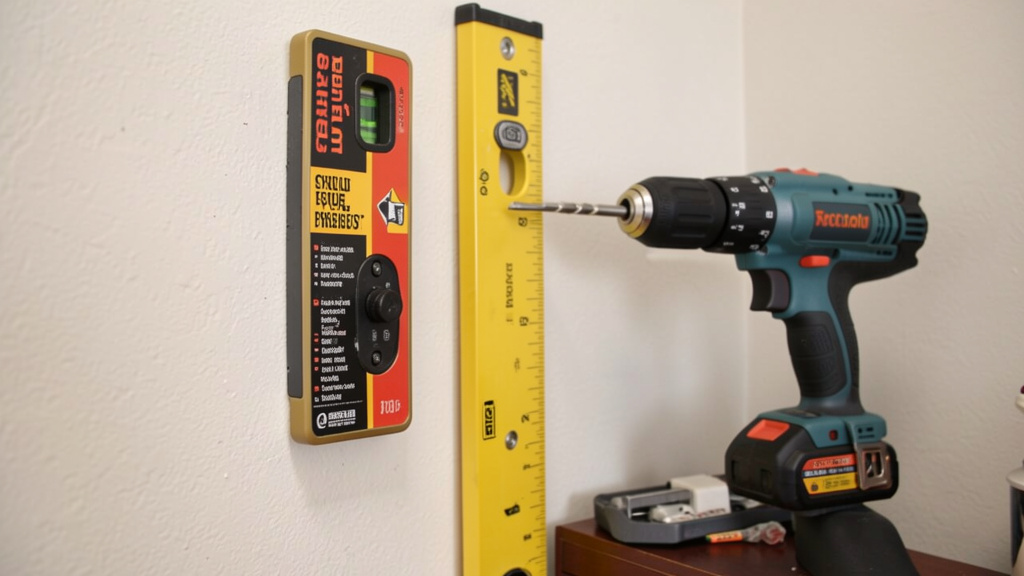
Understand your wall, respect the physics, and mount with confidence—without guesswork or unnecessary risk.
Mounting a shelf or television should feel secure, not stressful. Too often, well-intentioned DIY efforts lead to sagging shelves, damaged walls, or worse—because critical variables like wall composition, load dynamics, and hardware limitations weren’t fully considered. This guide offers a clear, step-by-step methodology grounded in building science principles and widely accepted safety practices. Whether you’re working with modern drywall, historic plaster, concrete, or metal studs, you’ll learn how to assess your specific situation, select appropriate hardware, and install with precision. No hype, no shortcuts—just reliable, actionable guidance designed to keep your belongings secure and your walls intact.
Introduction: Beyond the “Find a Stud” Simplification
Hardware store aisles overflow with anchors boasting impressive weight ratings. Online videos often skip critical verification steps. Meanwhile, real-world mounting success depends on understanding the unique interplay between your wall’s structure, the item’s weight and usage, and the hardware’s actual performance in your conditions. Failures commonly occur when anchors are used beyond their effective capacity for a specific wall type, when wall composition is misidentified, or when dynamic forces (like vibration or accidental bumps) aren’t accounted for.
This guide is built on a core principle: Every mounting decision must be tailored to your specific wall, load, and environment. There is no universal “best anchor.” Instead, safety emerges from careful assessment, appropriate hardware selection, and precise installation. We reference established standards from the International Residential Code (IRC) and ASTM International where relevant, focusing on observable, verifiable steps you can take. Safety isn’t a single step—it’s woven into the entire process. Let’s begin with the foundation: understanding what you’re mounting and what lies behind your wall.
The Load-and-Wall Assessment Framework: A 5-Step Safety Protocol
Success is determined long before the drill touches the wall. This sequential framework transforms mounting from uncertainty into a manageable, confident process. Skipping steps increases risk; following them builds reliability.
Step 1: Understand Your Load Realistically
“Weight” alone is misleading. Mounting stress comes from how the load behaves—not just its static weight. A television vibrates with sound, gets adjusted, or may be bumped. A shelf experiences shifting weight as books are added or removed. Ignoring these dynamics is like ignoring wind when assessing a structure’s stability.
Why this matters:
Hardware weight ratings typically reflect ideal lab conditions (perfect installation in new material, no movement). Real-world factors—wall age, vibration, installation precision—reduce effective capacity. Accounting for dynamic forces creates a crucial safety margin.
How to assess your load:
1. Base Weight: Weigh the item with everything it will hold. For TVs: include the mount, soundbar, and cables. For shelves: load with the heaviest intended items. Use a scale if possible.
Example: 65″ TV (55 lbs) + mount (8 lbs) + soundbar (12 lbs) = 75 lbs base weight.
2. Dynamic Factor: Apply a conservative multiplier based on use:
– Fixed TV mount (no movement): ×1.3
– Tilting/swiveling TV mount: ×1.7–2.0
– Shelf in high-traffic area or holding heavy items: ×1.8–2.2
Example: Tilting TV mount → 75 lbs × 1.8 = 135 lbs operational load.
3. Load Distribution: For mounts with multiple attachment points, divide the operational load by the verified number of secure anchor points. Never assume perfect load sharing.
Example: TV mount has 4 holes, but only 2 align with verified studs → 135 lbs ÷ 2 = ~68 lbs per secure point.
Common pitfall:
Relying solely on a mount’s advertised weight capacity without confirming its testing conditions. A mount rated for “150 lbs” may require installation into two wood studs 16 inches apart. If your wall has metal studs or you’re using anchors, that rating likely doesn’t apply. Always cross-reference mount requirements with your wall assessment.
Practical verification:
No scale? Use manufacturer specs plus conservative estimates:
– Hardcover books: ~1.5 lbs each
– Record albums: ~0.75 lbs each
– Dinner plates: ~1 lb each
Add a 15–20% buffer to all estimates. When uncertain, lean toward the higher estimate.
Step 2: Identify Your Wall Composition Accurately
What lies beneath the surface dictates every hardware choice. Misidentification is a leading cause of mounting failure. Use non-invasive methods first; proceed cautiously to verification.
Drywall (Gypsum Board):
– Clues: Smooth surface; slight give when pressed firmly; seams visible at corners or intervals; hollow sound when tapped.
– Verification: In an inconspicuous spot (e.g., inside a closet), gently press a small finishing nail (1.5″). Easy penetration with white dust suggests drywall.
– Important nuance: Thickness varies:
– 1/2″ (standard): Most anchor ratings assume this.
– 5/8″ (common in garages, fire-rated): Requires longer anchors; some toggles may not deploy fully.
– 3/8″ (older homes, mobile homes): Less robust; prioritize stud mounting or backing boards.
– Note: “Plasterboard” in the UK/EU is functionally equivalent. Metric thicknesses: 12.5mm ≈ 1/2″, 15mm ≈ 5/8″.
Plaster (Lath-and-Plaster or Veneer):
– Clues: Slightly uneven texture; harder surface; dull thud when tapped; hairline cracks near windows/doors; common in pre-1950s homes.
– Critical distinction:
– Lath-and-Plaster: Wood strips (lath) covered by 3/4″–1″ plaster. Anchors must grip behind the lath. Plastic anchors typically fail.
– Veneer Plaster: Special drywall (blueboard) with thin plaster skim. Harder surface; requires masonry bits for drilling.
– Verification: Drill a tiny pilot hole (1/16″) with a standard bit. Hitting wood strips after significant resistance suggests lath-and-plaster. Clean penetration with hard resistance suggests veneer plaster.
– Safety note: Avoid plastic expansion anchors in true lath-and-plaster. Toggle-style anchors that span multiple laths are generally required.
Concrete, Concrete Block (CMU), or Brick:
– Clues: Cool to touch; gritty texture; visible aggregate or mortar joints; sharp ping when tapped.
– Verification: Magnet test—concrete won’t attract magnets; steel studs or fasteners will. Drilling requires a masonry bit and produces gray dust.
– Key considerations:
– Solid Concrete: Requires wedge anchors, sleeve anchors, or concrete screws (e.g., Tapcon®).
– Hollow Concrete Block (CMU): Anchors must engage the solid “web” inside the block. Avoid anchors that sit in hollow cells.
– Brick: Drill into the brick itself (not mortar joints) using a carbide-tipped bit. Use appropriate masonry anchors.
Metal Studs:
– Clues: Surface looks like drywall. Stud finder shows a consistent, narrow metal signal. Walls may feel less solid; tapping produces a “tinny” ring. Common in apartments, offices, and modern construction.
– Verification: Use a strong magnet. It slides smoothly along the entire stud length (wood studs attract only at nail/screw points).
– Critical note: Metal studs are thin steel. Standard wood screws strip easily. Reliable options include:
– Snap toggles designed for metal studs
– Toggle bolts that span the cavity
– Backing board method (attaching plywood across multiple studs)
– Caution: Self-drilling screws marketed for metal studs may not provide sufficient holding power for heavier loads. Independent testing suggests performance can be inconsistent.
Practical Diagnostic Flow:
1. Tap the wall: Hollow resonance? Likely drywall/plaster. Dull thud? Possibly dense plaster. Sharp ping? Likely concrete/brick.
2. Magnet test: Strong, continuous attraction along a vertical line? Suggests metal studs. Intermittent attraction? Suggests wood studs (fasteners). No attraction? Could be drywall/plaster over wood, or concrete.
3. Pilot hole (last resort, in hidden area): White dust + easy penetration? Drywall. Hard resistance + gray dust? Concrete. Wood strips after initial resistance? Lath-and-plaster.
4. Consider home age: Pre-1950s? Higher likelihood of plaster. Post-1990s? Likely drywall; metal studs possible in non-load-bearing walls.
Step 3: Locate Structural Supports Precisely
Finding a stud isn’t enough—you need to verify what it is and exactly where its center lies. Inaccurate placement drastically reduces holding power.
Why verification matters:
Basic stud finders can misread textured walls, insulation, or pipes. Even accurate finders don’t distinguish wood from metal studs or pinpoint the exact center. Mounting near a stud’s edge (within 1/2″) can reduce pull-out strength by nearly half.
A Reliable Verification Method:
1. Initial Scan: Use a stud finder with deep-scan mode. Move slowly. Mark both edges of the detected area. Note width:
– ~1.5″ wide signal: Likely metal stud
– ~3.5″ wide signal: Likely wood stud (2×4)
– ~5.5″ wide signal: Likely wood stud (2×6) or double stud
2. Magnet Confirmation: Run a strong magnet along the marked area. Continuous slide = metal stud. Intermittent stick points = wood stud (nails/screws).
3. Physical Check (Recommended for critical mounts):
– Drill a tiny (1/16″) pilot hole at the center of your marked location.
– Insert a thin wire (unfolded paperclip).
– Firm resistance immediately? Wood stud. Thin metal “ping”? Metal stud. Slides freely? Empty cavity. Stop immediately if you suspect plumbing or wiring.
Helpful shortcut:
Electrical boxes are typically screwed to a stud on one side. With power OFF at the breaker and verified with a non-contact tester, remove the cover plate. Shine a light inside:
– Box attached to the right side of the cavity? Stud is on the right.
– Measure 16″ or 24″ from that edge to estimate the next stud location.
Note: Older homes may have irregular spacing. Always verify.
Common challenges:
– Textured walls: Can cause false readings. Temporarily smooth a small patch for scanning, or rely more on magnet/pilot hole methods.
– Insulated walls: Fiberglass can dampen signals. Use deep-scan mode if available.
– “Ghost” signals: Pipes or wires may trigger alerts. Magnet test helps distinguish continuous metal (stud) from localized metal (pipe).
– Edge mounting risk: Aim for the center third of any stud for maximum strength.
Step 4: Select Hardware Based on Verified Conditions
Choosing anchors before assessing wall and load is a frequent error. This decision guide aligns hardware with your verified reality. Never select hardware until Steps 1–3 are complete.
Core Principle: An anchor’s purpose is to safely transfer load into the wall’s structural system. If it cannot engage sufficient material strength behind the surface, failure becomes likely over time.
Hardware Selection Guide by Wall Type & Load
| Wall Type | Load Range | Recommended Approach | Why It Works | Key Installation Notes | Generally Avoid |
|---|---|---|---|---|---|
| Wood Studs | Any load | #8 or #10 Wood Screw (2.5″–3″ long) | Screws engage solid wood grain, distributing load effectively. | Pre-drill a small pilot hole to prevent splitting. Angle screws slightly inward for shear strength. | Short screws, drywall anchors |
| Metal Studs | < 30 lbs | Snap Toggle (metal-stud rated) | Wings span cavity, gripping stud faces with minimal deformation. | Drill hole to exact size. Pull until wings snap securely. | Plastic anchors, standard toggles |
| 30–75 lbs | Backing Board Method | Plywood distributes load across multiple studs. | Secure board to at least two studs with appropriate screws. Mount fixture to board. | Anchor-only solutions | |
| > 75 lbs | Consult a Professional | Requires structural assessment and reinforcement. | Safety first—do not guess. | DIY anchor solutions | |
| Drywall (1/2″) | < 15 lbs | Plastic Expansion Anchor | Adequate for very light, static items (small pictures, hooks). | Drill hole exactly to anchor size. Tighten until flange is flush. | Use in aged, thin, or plaster walls |
| 15–50 lbs | Molly Bolt | Metal sleeve expands against drywall backside; better grip than plastic. | Drill precise hole. Hammer until flush. Tighten until resistance increases. | Plastic anchors for medium loads | |
| 50–100 lbs | Snap Toggle | Wings lock perpendicular to wall, spanning a wider area behind drywall. | Verify cavity depth > 1.5″ for proper deployment. | Standard toggle bolts (wings can rotate) | |
| > 100 lbs | Backing Board Method | Transfers load to studs; eliminates reliance on drywall strength. | Board must span at least two verified studs. Use 3/4″ plywood for heavy loads. | Any drywall anchor | |
| Lath-and-Plaster | Any load | Toggle Bolt (long shank) | Wings grip behind multiple wood laths, bypassing brittle plaster. | Drill carefully through plaster layer. Use shank long enough to reach cavity. | Plastic anchors, molly bolts |
| Concrete/Block | < 50 lbs | Plastic Sleeve Anchor | Expands against concrete as screw tightens. | Drill hole deeper than anchor. Clean dust thoroughly. | Drywall anchors |
| 50–200 lbs | Wedge Anchor or Concrete Screw | Creates strong mechanical lock in solid concrete. | Use carbide-tipped bit. Clean hole meticulously. Follow torque specs if provided. | Short screws, plastic anchors | |
| Hollow Block | CMU-Specific Sleeve Anchor | Designed to expand within the solid web of the block. | Locate the solid web (measure from floor or use small test hole). | Anchors placed in hollow cells |
Understanding Anchor Mechanics
- Plastic Expansion Anchors: Rely on friction against drywall. Best for very light, static loads in sound, modern drywall. Performance drops significantly in aged, thin, or damaged walls.
- Molly Bolts: Metal sleeve compresses against the drywall backside. More reliable than plastic in good-condition drywall but can fail in crumbly material.
- Toggle Bolts (Traditional): Wings flip open behind the wall. Risk: wings can rotate parallel to the wall under vibration, reducing grip. Requires a larger hole.
- Snap Toggles: Wings lock perpendicular to the wall. Cannot rotate. Wider wing span distributes load better. Often reusable. Generally preferred for medium-load drywall applications.
- Wedge Anchors (Concrete): Cone-shaped sleeve wedges tightly between anchor body and concrete. Requires solid base material and meticulous hole cleaning.
Illustrative Scenario:
A floating shelf rated for 60 lbs is mounted in drywall using four plastic anchors. Over weeks, it sags.
– Anchor ratings assume ideal conditions (new drywall, perfect install).
– Actual drywall may be aged or slightly damaged.
– Books create dynamic load (removing/adding items).
– Operational load likely exceeded anchor capacity in that specific wall.
Solution: For shelves over 20–25 lbs in drywall, use snap toggles rated for the operational load or install a backing board secured to studs.
Practical Pathways
- Safety-First Path: Backing board for any load over 30 lbs in drywall, plaster, or metal studs. Eliminates anchor dependency.
- Budget-Conscious Path: High-quality snap toggles for medium loads (verify cavity depth and drywall condition).
- Temporary Fix: For a sagging shelf, install a backing board over the existing mount to redistribute load. Do not simply tighten failing anchors.
Step 5: Install with Care and Verification
Correct hardware installed poorly will fail. Correct hardware installed carefully succeeds. This protocol emphasizes precision and safety.
Pre-Installation Checklist:
✅ Turn OFF power at the breaker if working near outlets/switches; verify with a non-contact voltage tester
✅ Clear the work area; lay down a drop cloth
✅ Gather all tools and hardware before starting
✅ Dry-fit the mount with a level; mark exact screw hole locations
✅ Double-check marks avoid known obstacles (use stud finder’s AC detection if available)
Essential Tools by Scenario:
– Basic Stud Mounting: Cordless drill, appropriate bits, level (24″+), tape measure, pencil, safety glasses
– Drywall Anchoring: Drill bits matching anchor specs, hammer (for molly bolts), vacuum for dust
– Concrete/Block: Hammer drill, carbide-tipped masonry bits, wire brush, air blower
– Plaster Walls: Masking tape over drill points (reduces cracking), masonry bit for initial penetration
Installation Sequence:
1. Mark Precisely: Hold mount firmly against wall. Use level. Mark the center of each screw hole with an “X”. Re-measure between marks to match mount specifications.
2. Drill Pilot Holes:
– Wood Studs: Drill a small pilot hole (1/8″) through the wall surface into the stud (about 1/4″ deep) to prevent splitting.
– Drywall Anchors: Drill hole exactly to the anchor manufacturer’s specified diameter and depth. Too small = anchor won’t fit. Too large = anchor spins loose.
– Concrete: Drill hole 1/4″ deeper than anchor length. Clean thoroughly—dust prevents proper expansion.
3. Install Anchors (If Required):
– Plastic/Molly: Tap gently until flange is flush. Do not overtighten during insertion.
– Toggle/Snap Toggle: Insert body until wings deploy. For snap toggles, pull screw until you feel/hear the “snap.”
4. Attach Mount:
– Hand-start screws to avoid cross-threading.
– Tighten in a star pattern (like lug nuts) for even pressure.
– Stop when the mount is snug against the wall. Do not overtighten—this can strip anchors or crack plaster.
5. Final Check:
– Re-check level.
– Gently tug the mount downward at each corner. It should feel solid and immovable.
– For TV mounts: Attach the mount to the TV before hanging it on the wall (prevents dropping the TV during installation).
Wall-Specific Tips:
– Plaster Walls: Apply masking tape in an “X” over drill points. Drill slowly with light pressure. Start with a small masonry bit to penetrate the hard plaster layer cleanly.
– Metal Studs: When using snap toggles, ensure wings deploy firmly against the stud face. Pull screw until resistance increases noticeably.
– Concrete Block: Confirm you’re drilling into the solid web (not a hollow cell) by measuring from a known point (e.g., floor level).
– Thin Drywall (3/8″): Avoid anchors requiring deep cavity engagement. Molly bolts with wide flanges or the backing board method are safer choices.
The Stabilization Period:
– Applies to: Molly bolts, plastic anchors in drywall/plaster, concrete anchors.
– Why: Dust, minor wall compression, or adhesive curing (if used) benefits from brief stabilization.
– Recommendation: After installation, wait several hours (ideally overnight) before applying full load. For TVs: mount the bracket but delay hanging the TV. For shelves: install brackets but delay placing the shelf and contents.
– Exception: Wood screws driven securely into verified wood studs can typically bear load immediately after confirming tightness.
Navigating Common Real-World Scenarios
Homes are rarely textbook cases. These adaptations address frequent challenges with practical, safety-aware solutions.
Working with Plaster Walls
Lath-and-plaster demands patience. The plaster layer is brittle; rushing causes cracks that are difficult to repair cleanly.
Adapted Approach:
1. Confirm Type: Use the pilot hole test (Step 2). Wood strips appearing after drilling through a hard layer indicate lath-and-plaster.
2. Locate Laths: Use a strong magnet to find nail heads holding lath to studs (often spaced ~16″ apart). Mark likely lath lines.
3. Hardware Choice:
– Preferred: Toggle bolts with shanks long enough to reach behind the lath layer (typically 2″–2.5″ shank). Wings should span multiple laths.
– Alternative: Install a thin backing board (1/4″ plywood) secured with toggle bolts at corners. Mount the fixture to the board. Minimizes wall damage and distributes load.
4. Drilling Carefully:
– Place masking tape over the drill point.
– Start with a small masonry bit (1/8″) to cleanly penetrate the plaster.
– Switch to the correct-size bit for the anchor. Drill slowly; let the bit do the work.
5. Minimizing Damage: Apply painter’s tape in a 3″ radius around the drill point. Remove tape immediately after drilling. Fill minor cracks post-installation with appropriate patching compound.
Preservation Note: In historic homes, consult preservation guidelines. Brass hardware may be preferred for visible installations due to corrosion resistance and aesthetic compatibility.
Mounting on Concrete or Cinder Block
Precision matters—holes are permanent. Strategy prevents frustration and weak points.
Key Preparations:
– Locate Solid Material: In hollow block, measure from the floor to estimate block courses (typically 8″ high). Drill a small test hole to confirm you’re hitting the solid “web” between hollow cells. Shift location if needed.
– Moisture Awareness: In basements or exterior walls, check for moisture. Damp concrete compromises some anchor adhesion. Address moisture issues first if significant.
– Anchor Selection: Use anchors specifically rated for your substrate (solid concrete vs. hollow block).
Installation Tips for Wedge Anchors:
1. Drill with a hammer drill (rotation + hammer action).
2. Clean the hole thoroughly: Brush out dust, then blow with compressed air. Repeat.
3. Insert anchor; hand-tighten the nut until snug.
4. Tighten to the manufacturer’s specification if provided. Under-tightening = loose anchor. Over-tightening = stripped threads.
5. Allow a short stabilization period (e.g., 1 hour) before applying full load.
Drilling Through Tile Safely
Tile requires patience. One slip can crack the surface.
Low-Risk Drilling Method:
1. Mark Clearly: Apply masking tape over the tile at the drill point. Mark an “X” on the tape.
2. Bit Selection:
– Ceramic tile: Carbide-tipped masonry bit
– Porcelain/stone: Spear-point bit or diamond-tipped hole saw (for larger holes)
3. Drilling Technique:
– Start at the lowest drill speed. Apply firm, steady pressure.
– Keep the bit perfectly perpendicular to the tile surface.
– Once through the tile (resistance drops), switch to the appropriate bit for the substrate behind (drywall, cement board, etc.).
4. Anchor Choice: Select anchors based on the substrate behind the tile, not the tile itself. Tile is decorative; load transfers to the wall behind.
– Behind drywall: Snap toggle
– Behind cement board: Molly bolt or toggle
– Behind concrete: Wedge anchor
If Tile Cracks: Stop immediately. Fill the crack with clear epoxy. Shift the mount location at least 2″ away. Cover the original hole with a decorative cap if visible.
Metal Stud Walls: The Backing Board Solution
For loads over 30 lbs (most TVs, heavy shelves), anchors alone in metal studs carry higher risk. The backing board method is the most reliable DIY approach.
Backing Board Installation:
1. Locate Studs: Verify at least two metal studs using the verification method (Step 3).
2. Cut Board: Use 1/2″–3/4″ plywood or MDF. Width = distance between stud centers + 3″. Height = mount height + 4″.
3. Attach Board:
– Pre-drill holes in the board aligned with stud centers.
– Use self-tapping screws designed for metal studs (e.g., TEK screws, ~1.5″ long).
– Drive screws until the board is flush. Avoid overtightening—metal studs can dent.
4. Mount Fixture: Attach shelf brackets or TV mount directly to the board using wood screws.
5. Finishing: Paint the board to match the wall. For shelves, it can be part of the design. For TVs, it’s hidden behind the mount.
Why It Works: The board transforms concentrated point loads into distributed pressure across the stud faces, leveraging the metal studs’ strength more effectively.
Rental-Friendly Mounting Options
Landlord permissions vary. Prioritize solutions that minimize damage and allow restoration.
Generally Acceptable Approaches:
– Tension Rod Systems: For closets or between walls. Suitable for very light items (under 15–20 lbs).
– Adhesive Mounts (Use Judiciously):
– Only for: Very light loads (<5 lbs), smooth non-porous surfaces (glass, metal), short-term use.
– Products: Reputable brands like 3M Command™ strips (follow weight ratings and surface prep instructions precisely).
– Critical Protocol: Clean surface with isopropyl alcohol. Apply strip exactly per instructions. Wait the recommended time before hanging. Remove by pulling the tab straight down—never sideways.
– Freestanding Alternatives:
– TV stands with integrated cable management
– Ladder shelves placed against the wall (no mounting)
– Over-door organizers for lightweight items
Typically Avoid in Rentals:
– Any method requiring drilling without explicit landlord approval
– Heavy-duty adhesives (epoxy, construction adhesive)
– “No-hole” anchors that still require drilling
Pro Tip: Document wall condition with photos before moving in. Request mounting permissions in writing from your landlord before proceeding. When in doubt, choose freestanding solutions.
Tool Guidance: Choosing and Using Equipment Wisely
The right tool used correctly makes installation safer and more successful. Focus on function over brand.
Stud Finders: Matching Tool to Task
- Basic Electronic Finders:
- Best for: Smooth, modern drywall with wood studs.
- Limitations: Less reliable on textured walls, plaster, or metal studs.
- Tip: Calibrate on a known empty spot first. Move slowly. Mark edges, not just center.
- Magnetic Finders:
- Best for: Locating metal studs, verifying wood stud edges (via fasteners), plaster walls.
- Tip: A strong rare-earth magnet on a string can swing toward stud locations.
- Advanced Scanners (Deep-Scan):
- Best for: Complex walls (metal studs, dense insulation, plaster), critical mounts.
- Tip: Worth renting for a single important project if you lack confidence with basic tools.
Universal Reminder: No tool is infallible. Verification (magnet test, cautious pilot hole) is always recommended for critical mounts.
Drill Bits: Precision Matters
Using the correct bit type and size is non-negotiable for anchor performance.
| Substrate | Anchor Type | Bit Type | Critical Tip |
|---|---|---|---|
| Drywall | Plastic Anchor | Standard Twist Bit | Hole must match anchor body diameter exactly |
| Drywall | Molly Bolt | Standard Twist Bit | Hole = anchor sleeve diameter (check package) |
| Drywall | Snap Toggle | Standard Twist Bit | Hole = toggle body diameter (often 5/16″) |
| Plaster | Toggle Bolt | Masonry Bit (small) | Start small to penetrate plaster cleanly |
| Concrete | Wedge Anchor | Carbide-Tipped Masonry | Hole depth = anchor length + 1/4″ |
| Tile | Any | Spear-Point/Diamond | Drill only through tile; switch bits after |
| Metal Stud | Self-Tapping Screw | Standard Twist Bit | Pilot hole usually not needed |
Bit Care: Dull bits wander and create oversized holes. Replace bits that feel sluggish. Clean masonry bits after use. Store bits organized to avoid grabbing the wrong size mid-project.
Levels: Ensuring Straight Installation
A crooked mount affects both safety and appearance.
– Torpedo Level (6″): Small shelves, tight spaces.
– Carpenter’s Level (24″–48″): Essential for TV mounts, long shelves. Longer levels reveal subtle slopes.
– Laser Level: Projects a straight line; ideal for multi-point mounts (e.g., floating shelves). Often available for rent.
– Smartphone Apps: Not recommended for critical mounts. Sensor accuracy and case interference reduce reliability.
Leveling Technique: Place the level on the mount before drilling any holes. Adjust until level. Trace the mount’s top edge onto the wall. Remove the mount and drill along the traced line. This ensures alignment even if the mount shifts slightly during drilling.
Safety Gear: Essential Protection
- Safety Glasses: Protect eyes from dust, debris, or snapped bits. ANSI Z87.1 rated.
- Dust Mask (N95): Recommended when drilling concrete, plaster, or older drywall (pre-1980 homes may contain asbestos—consult a professional if concerned).
- Work Gloves: Protect hands from sharp anchor edges or splinters.
- Hearing Protection: Necessary when hammer drilling concrete.
TV Mounting Considerations: Addressing Unique Factors
Televisions introduce specific challenges: height, vibration, adjustment needs, and value. Tailor your approach accordingly.
Understanding VESA Patterns
VESA defines the screw hole pattern on the TV back. Mismatched mounts can damage the TV.
Verification Steps:
1. Check the TV manual or manufacturer website for the VESA specification (e.g., “VESA 400×400”).
2. Measure horizontally and vertically (in millimeters) between the centers of the screw holes on the TV back.
3. Confirm the mount explicitly supports your exact pattern and TV size/weight.
Critical Check:
– The mount’s weight capacity must exceed your calculated operational load (Step 1), not just the TV’s static weight.
– Ensure the mount is rated for your TV’s screen size range.
Mount Types and Wall Requirements
| Mount Type | Best For | Load Consideration | Wall Requirement |
|---|---|---|---|
| Fixed | Eye-level viewing, minimal depth | Lowest stress on wall | Studs preferred; anchors possible for very light TVs (<30 lbs operational load) |
| Tilting | High mounts (e.g., above fireplace) | Adds leverage; increases wall stress | Strongly recommend hitting studs or using backing board |
| Full-Motion | Corners, multiple viewing angles | Highest dynamic load (extension + tilt) | Requires mounting into at least two wood studs; anchors alone are not recommended |
| Ceiling | Limited wall space | Significant leverage; complex forces | Requires mounting into ceiling joists; professional installation strongly advised |
Why Full-Motion Mounts Demand Studs:
Extending a TV away from the wall creates leverage (torque = force × distance). At full extension, wall stress can significantly exceed the TV’s weight. Anchors in drywall are not designed for this cyclic, leveraged stress. Mounting a full-motion bracket solely with drywall anchors carries a high risk of progressive failure.
Cable Management: Safety and Neatness
Exposed cables are tripping hazards and can strain TV ports.
– Integrated Approach: Before mounting, attach adhesive cable raceways along the planned path. Drill a small access hole below the mount to feed cables into the wall cavity (if safe and permitted). Use fish tape to guide cables down to an outlet.
– Rental-Friendly: Surface-mounted adhesive raceways (e.g., J-channel) can be removed carefully with dental floss to minimize paint damage.
– Final Check: Secure cables with clips. Ensure no tension pulls on the TV’s connection ports.
Post-Installation TV Check
- [ ] Mount screws fully tightened (no wobble)
- [ ] TV securely locked into mount mechanism
- [ ] Cables managed with strain relief
- [ ] Gentle test: Apply light downward and side-to-side pressure. Mount should not shift.
- [ ] Viewing angle comfortable from primary seating position
Shelf Mounting Considerations: Ensuring Long-Term Stability
Shelves often fail gradually (sagging) before collapsing. Proactive design prevents this.
Bracket Selection and Load Distribution
- L-Brackets: Simple. Best for light loads (<25 lbs) or short shelves (<24″).
- Floating Shelf Systems (Hidden Brackets): Rods or plates inside the shelf. Critical: Rods must penetrate deeply into solid shelf material (min. 2/3 shelf depth). Shelves must be solid wood or high-density MDF—not particleboard.
- Corbel Brackets: Decorative and functional. Transfer load downward. Ideal for heavier loads when mounted correctly.
- Standoff Brackets: Create a “floating” look with visible supports. Distribute load across multiple anchor points.
Why Shelf Depth Matters:
Weight placed at the front edge of a deep shelf creates leverage on the wall attachment. A 12″-deep shelf with books at the front exerts significantly more stress than the same weight centered.
Practical Tip: For shelves over 10″ deep holding heavy items, use deeper brackets, mount into studs, or limit the shelf depth. Place heavier items closer to the wall.
Shelf Material Integrity
- Solid Wood (Oak, Maple): Excellent strength and screw-holding ability.
- Plywood (3/4″ Baltic Birch): Strong and stable. Good choice for floating shelves. Avoid thin plywood (<1/2″).
- MDF: Holds screws well but is heavy and can sag over time under heavy loads. Consider internal reinforcement for long spans.
- Particleboard/Laminate: Not recommended for wall-mounted shelves. Screws strip easily; material lacks structural integrity. Suitable only for freestanding furniture.
Floating Shelf Installation Tips:
1. Verify wall type and locate studs (Steps 2–3).
2. For shelves over 24″ long or rated over 20 lbs: Aim to hit at least one stud. Use a backing board if stud alignment isn’t feasible.
3. Drill precise holes for support rods (match rod diameter exactly).
4. Insert rods into anchors/studs.
5. Slide shelf onto rods; ensure full, even seating.
6. Test: Apply downward pressure at the front edge. No movement should occur.
Preventing Sag in Long Shelves
- Center Support: Add a middle bracket or corbel for shelves over 36″ long.
- Material Thickness: Use thicker material (e.g., 1″) for shelves over 48″ long.
- Reinforcement: Embed a steel flat bar inside the shelf during construction for critical spans.
- Load Strategy: Place heavier items toward the back (near the wall); lighter items at the front.
Safety Awareness and Problem Response
Even careful installers encounter surprises. Knowing how to respond prevents minor issues from escalating.
Warning Signs of Potential Failure (Address Immediately)
- Visible Movement: Shelf or mount tilting downward (>1/8″) or wobbling when touched.
- Audible Cues: Cracking, popping, or creaking sounds from the wall or mount during use.
- Anchor Issues: Screws protruding, anchors spinning when tightened, or visible gaps between mount and wall.
- Wall Damage: Cracks radiating from mount points, bubbling paint, or crumbling material.
If You Observe These Signs:
1. Unload Safely: Remove all items from the shelf or TV from the mount immediately. Do not stand directly beneath it.
2. Assess Cautiously: Use a mirror on a stick to inspect anchor points if needed.
3. Provide Temporary Support: For shelves, place a sturdy box or ladder underneath. For TVs, have two people support the TV while carefully dismounting.
4. Diagnose Thoughtfully:
– Anchors pulling out? Wall material may be compromised; backing board likely needed next time.
– Screws loose in stud? Stud may have been missed, or screw was too short.
– Mount damaged? Hardware defect or overtightening possible.
5. Repair Wall Properly: Patch holes correctly before attempting a new mount (see below).
Wall Repair Basics
Small Holes (Anchor-sized):
1. Clean hole of debris.
2. Fill with spackling compound using a putty knife.
3. Smooth flush with the wall surface.
4. Sand lightly when dry.
5. Prime and paint to match.
Larger Holes or Cracks:
1. Cut the damaged area into a clean rectangle with a utility knife.
2. Insert a backing wood strip inside the wall cavity; secure it with screws through the wall.
3. Cut a drywall patch to fit the hole.
4. Screw the patch to the backing strip.
5. Apply joint compound over seams; feather edges smoothly.
6. Sand when dry; prime; paint.
Plaster Repair Note: Use plaster-specific patching compound (not standard spackle). Apply in thin layers. Lightly misting between layers can help prevent cracking. Matching the original texture may require practice.
When to Seek Professional Help
Consult a qualified handyman or contractor if:
– The operational load exceeds 75–100 lbs with no verified stud access
– The wall shows signs of structural damage (large cracks, water damage, soft spots)
– Electrical wiring or plumbing conflicts cannot be safely avoided
– You lack confidence in diagnosing wall composition or selecting hardware
– Mounting in a historic home with preservation requirements
– Installing a full-motion TV mount with no stud access
Finding Help: Look for professionals with verified reviews showing mounting work. Ask about their method for heavy drywall mounts (e.g., “Do you use a backing board for loads over 30 lbs?”). Confirm they carry insurance.
Your Questions, Answered
Q: Can I mount a TV on drywall without hitting any studs?
A: For very light TVs (under 30 lbs operational load) in good-condition drywall, high-quality snap toggles rated for the specific load may be used cautiously. However, TVs involve vibration, value, and safety considerations. For virtually all standard TVs, the backing board method (mounting a plywood panel securely to studs first) is the strongly recommended approach. Anchors alone in drywall create concentrated stress points that can fatigue the material over time.
Q: How much weight can a single stud hold?
A: A single properly installed wood screw in the center of a sound wood stud can support a significant static load. However, safety depends on multiple factors: screw type/length, wood condition, number of screws, and load dynamics (shear vs. pull-out). For critical mounts like TVs, distribute the load across at least two studs using multiple screws per stud. Never rely on a single screw point for loads over 50 lbs operational weight.
Q: Are plastic drywall anchors ever appropriate?
A: Yes, but within strict limits: for very light, static loads (under 10–15 lbs) in sound, modern 1/2″ drywall. Examples include small picture frames, lightweight hooks, or toothbrush holders. They are not suitable for shelves, TVs, dynamic loads, aged drywall, plaster, or thin drywall. When in doubt, choose molly bolts or snap toggles—they offer a wider safety margin for minimal extra cost.
Q: My stud finder indicates metal—how do I know if it’s a stud or a pipe?
A: Critical distinction. Pipes carry utilities; drilling into them causes damage. Verify carefully:
1. Location: Pipes typically run vertically near plumbing fixtures or horizontally near floors/ceilings.
2. Magnet Test: Copper or PVC pipes won’t attract a magnet. Metal studs create a continuous vertical magnetic field.
3. Temperature (Caution): On a cold day, metal water pipes may feel cooler than surrounding wall.
4. Sound: Pipes often produce a higher-pitched “ping” than metal studs’ “thud.”
5. When uncertain: Drill a tiny (1/16″) exploratory hole in an inconspicuous spot. If you see copper, PVC, or moisture, STOP and patch immediately. Relocate the mount point. When in doubt, choose a different location.
Q: Is finding the exact center of a stud important?
A: Yes. Screws placed near the edge of a stud (within 1/2″) have significantly reduced pull-out strength due to potential wood splitting or reduced thread engagement. Always aim for the center third of the stud. Use the verification method (Step 3) to mark edges precisely, then calculate the center point. For metal studs, center mounting helps prevent dimpling of the thin steel.
Q: Can I reuse an existing anchor hole?
A: Generally not recommended for critical mounts. Drywall or plaster holes are compromised after anchor removal. Concrete holes may be reusable only if meticulously cleaned and the new anchor matches the hole exactly. Safer approaches:
– Drywall/Plaster: Patch the hole completely; remount 1–2 inches away.
– Wood Studs: If a screw hole is stripped, drill it out slightly, insert a wooden toothpick dipped in wood glue, let dry, then re-drill a pilot hole.
– Concrete: Clean thoroughly; consider a slightly larger anchor if feasible.
Never force an anchor into a used hole expecting full strength.
Q: What’s the practical difference between a molly bolt and a toggle bolt?
A: Both are mechanical anchors for hollow walls, but their mechanisms differ:
– Molly Bolt: A metal sleeve expands against the backside of the drywall as the screw tightens. Requires a precise hole size. Performs well in solid drywall but can fail in crumbly material.
– Toggle Bolt: Wings flip open behind the wall surface to span a larger area. Traditional toggles can rotate under vibration. Snap toggles lock the wings perpendicular to the wall, offering more reliable holding power for dynamic loads.
For most modern drywall applications requiring medium holding power, snap toggles are often the preferred choice for reliability and ease of installation.
Q: Is it safe to mount near electrical outlets or switches?
A: Yes, with precautions:
1. Turn OFF power at the circuit breaker; verify with a non-contact voltage tester.
2. Remove the cover plate to see how the electrical box is mounted.
3. Position your mount around the box—never drill into it.
4. Use low-profile brackets that sit flush beside the box.
5. For floating shelves, ensure support rods avoid the box location.
If mount holes conflict with the box, adjust the mount position slightly or select a different bracket style. Electrical safety always takes precedence.
Q: How do temperature and humidity affect mounting?
A: Environmental factors matter:
– Wood Studs: Expand in high humidity, contract in dry conditions. Pre-drilling pilot holes minimizes splitting risk from movement.
– Drywall: High humidity can soften gypsum over time, potentially reducing anchor holding power. Avoid mounting heavy items in consistently damp areas (e.g., unventilated bathrooms) without moisture-resistant drywall.
– Metal Studs: Condensation in humid environments may accelerate corrosion of fasteners. Stainless steel or coated screws offer better resistance.
– Adhesives: Most require specific temperature and humidity ranges to cure properly. Check product instructions.
For mounts in variable environments (sunrooms, garages), prioritize mechanical fastening (screws into studs) over adhesives or anchors where possible.
Q: Do I need a building permit to mount a TV or shelves?
A: Mounting standard shelves or TVs typically does not require a permit in residential settings. Exceptions may include:
– Installations involving structural modification (e.g., opening walls to install backing)
– Local regulations for mounts exceeding specific weight thresholds
– Rental properties where landlord approval is contractually required
When uncertain, contact your local building department. More importantly, if your project requires opening walls or modifying structure, consult a qualified professional—permits exist to ensure safety.
Q: Why do anchors specify “for use in drywall only”?
A: Anchor engineering is substrate-specific. An anchor designed for drywall’s uniform density will not perform reliably in plaster (brittle), concrete (too hard), or wood (no cavity to expand into). Using anchors outside their intended substrate voids safety expectations. Always match anchor type to your verified wall composition (Step 2). When wall type is uncertain, choose the most conservative solution (e.g., backing board).
Q: Should I avoid mounting near drywall seams?
A: Yes. Seams between drywall panels are weak points:
– Drywall edges are beveled and lack full thickness.
– Joint compound and tape provide no structural support.
– Normal house movement can stress anchors near seams.
Always position mount points at least 1 inch away from seams, corners, or edges. Verify solid substrate behind your intended drill point using the pilot hole test if needed.
Conclusion and Your Next Step
Safe mounting isn’t about memorizing hardware names or finding shortcuts. It’s a thoughtful process of understanding your specific conditions, selecting appropriate solutions, and executing with care. You now have a clear framework: assess your load realistically, identify your wall composition reliably, choose hardware matched to those conditions, and install with precision. This approach builds confidence and creates secure, lasting results—whether you’re installing a child’s bookshelf or a home theater display.
Three Foundational Practices
1. Verify Before You Drill: Never assume wall type or stud location. Use multiple methods to confirm.
2. Match the Solution to the Situation: Hardware is a tool for specific jobs. When load or wall type demands it, use backing boards or seek professional help.
3. Allow for Stabilization: For anchors in drywall, plaster, or concrete, a brief waiting period before full loading supports long-term integrity.
Your Immediate Action
Within the next 24 hours, complete this simple step: Gather your mounting hardware and cross-reference each piece with your verified wall type and calculated operational load. Check anchor types, screw lengths, and mount specifications against this guide. This 10-minute verification prevents frustration, damage, and potential safety issues. Do not proceed to drilling until every component aligns with your assessment.
A Final Thought
Every successful mount reflects respect for materials and physics. When we work with our homes—understanding their structure and limitations—we create spaces that are not only functional but enduring. This mindful approach extends far beyond mounting; it’s the essence of thoughtful home care. Your wall remains secure today because you chose knowledge over assumption. Carry that intention forward.
Explore Related Guidance:
Understanding Wall Repair: From Small Holes to Major Damage | Home Electrical Safety Basics for DIY Projects | Designing Durable Built-In Shelving | Optimizing TV Placement for Comfort and Viewing | Preserving Historic Walls During Updates | Building a Practical Home Tool Kit | Smart Solutions for Rental Home Modifications