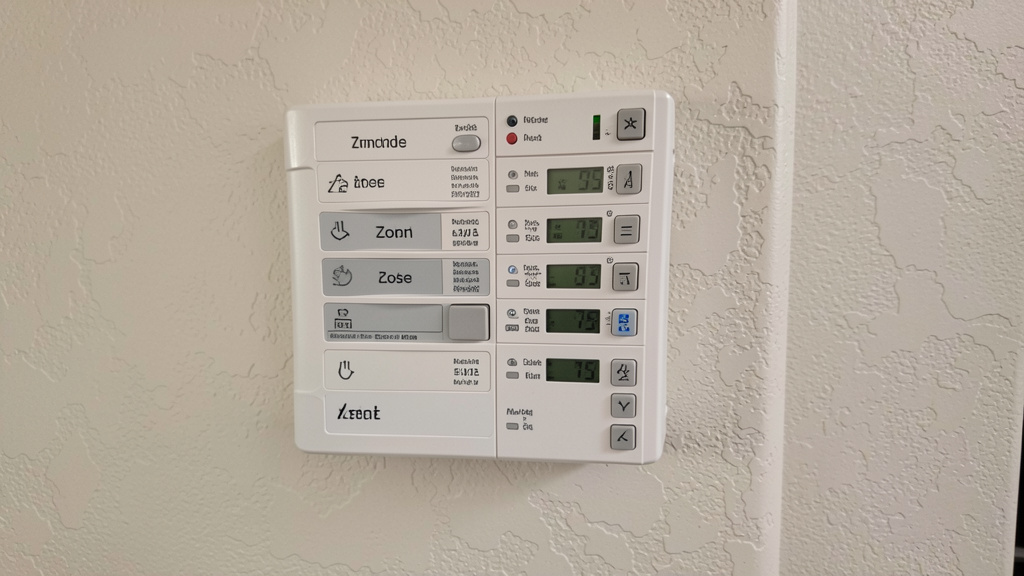
Stop compromising. Start customizing. Transform inconsistent temperatures, wasted energy, and thermostat conflicts into personalized comfort tailored to every room, schedule, and season—without replacing your entire HVAC system.
Imagine waking to a gently warmed bathroom on a winter morning while the guest room remains energy-efficiently cool. Picture your sun-drenched home office maintaining a crisp 72°F at 3 p.m., while the shaded nursery stays comfortably cozy. Envision silencing the constant cycling of your furnace because airflow is intelligently directed only where needed. This isn’t futuristic fantasy—it’s the tangible reality of HVAC zoning. For decades, whole-home climate control meant accepting compromise: overheating unused rooms to warm the drafty den, blasting AC to cool the upstairs while the basement feels chilly, or enduring the frustration of a single thermostat dictating comfort for vastly different spaces. HVAC zoning dismantles this outdated paradigm. By dividing your home into independently controlled climate zones—each with its own thermostat and automated dampers—you gain precise control over temperature, airflow, and efficiency. This guide transcends superficial overviews. We dissect airflow dynamics, decode compatibility nuances with existing systems, translate technical specifications into actionable decisions, and address pitfalls documented across numerous installations. Whether your motivation is eliminating hot/cold spots, accommodating diverse household schedules, reducing energy strain, or preparing for smart home integration, this resource provides a structured framework to navigate zoning with clarity. Grounded in engineering principles and field-observed implementation patterns, you’ll move from uncertainty to a clear, customized roadmap—empowering informed discussions with contractors or confident execution of appropriate DIY steps.
Introduction: Why “One Thermostat Rules All” Is a Flawed Promise
The conventional single-thermostat HVAC system operates on a beautifully simple but fundamentally flawed assumption: that every square foot of your home experiences identical heating and cooling demands simultaneously. Reality, however, is far messier. Solar radiation floods south- and west-facing rooms in the afternoon. Heat rises relentlessly, leaving upper floors warmer while basements feel cooler. High ceilings in great rooms create vast air volumes that resist temperature change. Occupancy patterns shift hourly—children asleep in cool bedrooms while adults work in a sunlit study. Add architectural complexities like vaulted ceilings, large windows, open floor plans intersecting with closed-off wings, or rooms over unconditioned garages, and the “one-size-fits-all” approach collapses under its own inefficiency. The result? Constant thermostat adjustments, wasted energy heating or cooling empty spaces, shortened equipment lifespan from excessive cycling, and persistent discomfort that erodes daily well-being.
This isn’t merely an inconvenience; it’s a systemic inefficiency with documented consequences. Analyses aligned with U.S. Department of Energy frameworks indicate homes with significant temperature imbalances may consume notably more energy annually than optimized counterparts, as systems labor excessively to satisfy the thermostat’s location while ignoring conditions elsewhere. Furthermore, persistent short-cycling—where the furnace or AC turns on and off frequently because the single thermostat location reaches temperature while other zones remain unconditioned—accelerates wear on critical components like compressors, igniters, and fan motors. The psychological impact is equally real: thermostat disagreements affect household harmony, while inconsistent sleep environments due to bedroom temperature fluctuations can impact rest quality. HVAC zoning directly addresses these challenges not as a luxury add-on, but as a logical evolution of home climate management. It acknowledges that modern homes are complex thermal environments, not uniform boxes. By enabling targeted delivery of conditioned air, zoning aligns system output with actual demand. This guide is meticulously constructed to demystify the journey from recognizing your home’s unique thermal characteristics to implementing a solution that delivers lasting comfort and efficiency. We prioritize clarity over jargon, actionable insight over theoretical fluff, and evidence-based reasoning over marketing claims. You’ll gain foundational knowledge to evaluate options critically, ask precise questions of professionals, and make decisions aligned with your home’s architecture, budget, and lifestyle—not vendor scripts.
The Three-Layer Zoning Blueprint: Assessment, Components, Calibration
True zoning success hinges on a systematic approach, not just installing dampers and calling it complete. Rushing into component selection without foundational analysis leads to imbalanced airflow, equipment strain, or unmet expectations. Conversely, over-engineering a simple need wastes resources. The Three-Layer Zoning Blueprint provides a repeatable, logical sequence observed in consistently successful implementations. This framework transforms zoning from a vague concept into a structured project with clear milestones. Each layer builds upon the previous one, ensuring decisions are intentional, compatible, and calibrated for your specific environment. Think of it as moving from diagnosis (Layer 1) to prescription (Layer 2) to fine-tuning (Layer 3). Skipping layers risks solving the wrong problem or creating new ones. Let’s dismantle the process step by step, with concrete examples and critical “why” explanations embedded throughout.
Layer 1: Thermal Personality Assessment – Mapping Your Home’s True Needs
Before touching a single tool or requesting a quote, dedicate time to objectively diagnose why your home experiences temperature inconsistencies. This isn’t about guessing; it’s about gathering evidence. A precise assessment prevents misdirected solutions—like installing expensive zoning dampers when the root cause is severely leaky ductwork or inadequate insulation. This layer has three non-negotiable phases: Documentation, Pattern Tracking, and Root Cause Differentiation.
Phase 1: Create a Thermal Map
Grab a floor plan (sketch one if needed) and a reliable digital thermometer. Over two consecutive days—one predominantly sunny, one cloudy—measure temperatures in every room at three key times:
– Early Morning (6–7 a.m.): Captures overnight heat loss patterns.
– Mid-Afternoon (2–3 p.m.): Reveals solar heat gain impact.
– Evening (8–9 p.m.): Shows residual heat distribution after sunset.
Record temperatures at occupant height (e.g., 3–4 feet off the floor), not near ceilings or floors. Note additional factors:
– Window exposure: South/west windows = high solar gain potential. North = minimal gain.
– Room usage: Home office (computers add heat), kitchen (appliances), bathroom (humidity spikes).
– Architectural quirks: Rooms over garages (potential insulation gaps below), vaulted ceilings (heat stratification), interior vs. exterior walls.
– Current pain points: “Master bedroom is consistently warmer than hallway at night,” “Basement feels damp and chilly even when thermostat reads 70°F.”
Why this matters: Data replaces assumption. You might feel the living room is always cold, but measurements may reveal it’s only cold between 4–6 p.m. due to west-facing windows losing heat rapidly after sunset—a timing issue solvable with zoning schedules, not just more heat. This map becomes your objective baseline for designing zones and later verifying system performance.
Phase 2: Track Occupancy & Usage Patterns
Comfort is deeply personal and temporal. A room needing 68°F for sleeping requires 72°F for focused work. Document:
– Which rooms are consistently occupied during specific hours? (e.g., home office 9 a.m.–5 p.m., kids’ rooms after school)
– Which rooms are frequently vacant? (guest room, formal dining)
– Are there conflicting preferences? (Partner prefers bedroom at 65°F; you prefer 70°F)
– Seasonal variations? (Sunroom uncomfortable in summer but pleasant in winter)
Why this matters: Zoning’s greatest efficiency gains come from not conditioning unoccupied spaces. If your guest room is used infrequently, zoning allows you to maintain it at a minimal safe temperature in winter (preventing pipe concerns) and a higher setback temperature in summer—saving energy versus heating/cooling it to occupied-room standards year-round. Pattern tracking identifies where scheduling delivers maximum benefit.
Phase 3: Differentiate Zoning Needs from Underlying Issues
This is the most critical diagnostic step. Temperature inconsistencies often stem from problems zoning cannot fix alone. Conduct these checks:
– Ductwork Inspection: With the system fan running, feel supply vents. Is airflow weak in problem rooms? Check accessible ducts (attic, basement) for visible kinks, crushing, or disconnected sections. Listen for loud whistling (indicating restricted airflow). Significance: Zoning dampers restrict airflow further. If baseline airflow is poor due to duct issues, adding dampers may starve zones entirely. Duct sealing/repair often precedes zoning.
– Insulation & Air Sealing Audit: On a cold day, feel interior walls, windows, and doors in problem rooms. Are they noticeably colder than others? Check attic insulation depth (should align with regional recommendations). Significance: A room over an unconditioned garage with minimal insulation will struggle to maintain temperature, regardless of airflow. Zoning can help manage the symptom, but addressing insulation is the foundational solution. Prioritize air sealing gaps around windows, doors, and where walls meet foundations.
– System Sizing Awareness: Does your existing HVAC unit short-cycle (run for very short durations) even on mild days? Or run constantly on moderate days? Significance: An oversized system delivers conditioned air too aggressively, making precise zoning control challenging. An undersized system lacks capacity to handle multiple zones calling simultaneously. While zoning can optimize an existing system, significant sizing mismatches may require professional evaluation of equipment capacity before zoning installation.
Real-World Example: Sarah documented her two-story home. Her thermal map showed the upstairs consistently warmer than downstairs by mid-afternoon. Pattern tracking revealed the upstairs was vacant during work hours. Initial assumption: “Need more AC upstairs.” Deeper assessment uncovered two root causes: 1) Significant duct leakage in the unconditioned attic, and 2) Inadequate return air pathway upstairs. Solution path: First, seal attic ducts and add a dedicated return air grille upstairs. Then implement a two-zone system (upstairs/downstairs). Without fixing the ducts first, zoning dampers would have worsened airflow upstairs. This phased approach delivered superior results and avoided unnecessary expense.
The Fundamental Principle: Zoning optimizes airflow delivery; it does not create capacity or fix thermal envelope deficiencies. Address the house first, then refine the system.
Layer 2: Component Selection – Matching Technology to Your Blueprint
With your thermal map and root causes documented, you can now select components with precision. This layer moves beyond brand names to focus on functional compatibility with your existing HVAC system and architectural constraints. Key components form an interdependent ecosystem: dampers, thermostats, control panel, and sensors. Choosing mismatched parts creates friction; selecting harmonized components ensures seamless operation. We break down each element with decision frameworks, not just feature lists.
Understanding Damper Types: Motorized vs. Manual, Blade vs. Butterfly
Dampers are the physical “valves” that open or close duct branches to direct airflow. Selection depends on duct type, space constraints, and control needs.
– Motorized Dampers (Essential for Automated Zoning):
– Blade Dampers: Feature multiple parallel blades (like window blinds). Ideal for rectangular ducts. Provide smoother airflow modulation (can partially open/close) and create less turbulence/noise than butterfly styles. Best for: Main trunk lines feeding entire zones (e.g., dampers controlling all upstairs ducts). Require adequate clearance (typically 12+ inches of straight duct before/after).
– Butterfly Dampers: Single circular disc that rotates to block airflow. Compact design fits tight spaces (e.g., inside wall cavities near branch takeoffs). Simpler mechanism, often lower cost. Best for: Individual room branches where space is limited. Less precise for partial modulation; typically function as “open/close” valves.
– Critical Compatibility Check: Confirm voltage requirements (24V AC is standard for residential HVAC integration). Verify physical dimensions match your duct openings (measure existing takeoffs!). Ensure the damper’s torque rating is sufficient to overcome static pressure in your duct system—undersized motors may stall. Reputable manufacturers provide sizing guidance based on duct size and system airflow.
– Manual Dampers (The Strategic Supplement):
Often overlooked, manual volume dampers (located at individual supply vents) are invaluable after automated zoning is installed. Once your motorized zone dampers establish broad control (e.g., “upstairs zone”), use manual dampers to fine-tune airflow within the zone. Example: In an upstairs zone, slightly close the manual damper on the vent in the small linen closet to redirect more air to the larger bedrooms. Why include them? Automated dampers control zone-level airflow; manual dampers handle micro-balancing. They’re inexpensive insurance against minor imbalances.
Common Mistake to Avoid: Installing motorized dampers on every single branch duct without a control strategy. This creates excessive complexity, high cost, and potential airflow conflicts. Strategic placement on major zone branches (e.g., one damper controlling all ducts to the second floor) is more effective and reliable than over-dampering. Start with 2–4 zones max for most homes; expand later if needed.
Thermostat Strategy: Smart vs. Basic, Wired vs. Wireless
Thermostats are your interface to the zoning system. Selection impacts usability, integration, and long-term flexibility.
– Wired vs. Wireless:
– Wired (Recommended for Primary Zones): Uses existing thermostat wiring (typically 5+ wires: R, C, W, Y, G). Provides reliable operation, no battery changes, and seamless integration with the zoning control panel. Ideal for: Master bedroom, main living area—zones where consistent operation is critical.
– Wireless (Strategic for Challenging Locations): Battery-powered sensors communicate via RF to a central hub. Ideal for: Rooms where running new wires is difficult (e.g., finished basement, historic homes with plaster walls). Critical Caveat: Verify signal range and penetration through walls/floors. Test placement before final installation. Avoid relying solely on wireless for critical zones; use as supplements.
– Smart Thermostat Integration:
Modern zoning systems increasingly integrate with smart thermostats. However, compatibility is not universal.
– True Integration: The zoning control panel communicates directly with the thermostat(s), allowing the thermostat to display active zones, receive occupancy data from remote sensors, and adjust schedules based on zone activity. Requires specific panel-thermostat partnerships.
– Limited Integration: Smart thermostats control individual zones but lack awareness of the overall system state. Risk: If Zone A calls for heat and Zone B calls for cooling simultaneously (possible in shoulder seasons), the system may short-cycle or default to one mode, causing discomfort.
– Decision Framework: If you prioritize unified smart home control (voice commands, geofencing, energy reports), prioritize systems with documented, robust integration between the zoning panel and your preferred thermostat ecosystem. If simplicity and reliability are paramount, dedicated zoning thermostats (often simpler interfaces) may be preferable. Always confirm compatibility in writing with the manufacturer or installer before purchase.
Budget-Conscious Path: Start with basic, reliable wired thermostats for each zone. They lack smart features but provide precise temperature control and scheduling. Upgrade to smart thermostats later if desired—the zoning dampers and panel remain functional. Avoid inexpensive, no-name wireless thermostats; unreliable communication causes more frustration than it solves.
The Brain: Zoning Control Panel Selection
This unsung hero coordinates damper positions, thermostat requests, and HVAC equipment operation. Its intelligence determines system behavior during conflicting demands (e.g., one zone needs heat, another needs cooling).
– Basic Relay Panels: Simple on/off control. When any zone calls for heating, the panel opens that zone’s damper and signals the furnace. If multiple zones call, all relevant dampers open. Limitation: Cannot handle simultaneous heat/cool requests. May contribute to short-cycling if zones have widely different demands. Best for: Simple two-zone setups in climates with distinct heating/cooling seasons (minimal shoulder-season conflict).
– Advanced Logic Panels (Highly Recommended): Feature microprocessors that manage complex scenarios:
– Priority Sequencing: Assigns priority (e.g., “Master Bedroom” zone overrides “Guest Room” if both call simultaneously during low-demand periods).
– Staging Management: Coordinates with multi-stage or variable-speed HVAC equipment to match output to total demand across zones (e.g., low stage for one zone calling, high stage for all zones calling).
– Conflict Resolution: In shoulder seasons, uses algorithms to satisfy the majority need first or cycles between modes efficiently. Some panels delay non-critical zone requests briefly to avoid short-cycling.
– Fail-Safes: Includes pressure sensors or timers to prevent the system from running with all dampers closed (which could stress the heat exchanger or evaporator coil). Non-negotiable feature: Ensure any panel has a “bypass damper” control or pressure relief strategy.
– Bypass Dampers: The Essential Safety Valve
When zoning dampers close off sections of ductwork, static pressure builds in the remaining open ducts. Excessive pressure can:
1. Strain the blower motor, increasing noise and energy use.
2. Cause duct joints to separate over time.
3. In extreme cases, contribute to heat exchanger stress (furnace) or evaporator coil icing (AC).
A bypass damper solves this. Installed between the supply and return plenums, it opens automatically when pressure exceeds a safe threshold, redirecting excess air back to the return. Crucially: Bypass dampers are not optional for most zoning installations. They are a critical safety and longevity component. Confirm your chosen zoning system includes or recommends a properly sized bypass damper with pressure-sensing control.
Real-World Example: Mark installed a basic two-zone system (upstairs/downstairs) without a bypass damper. On mild spring days, when only the downstairs zone called for brief cooling cycles, the closed upstairs dampers caused elevated pressure. Within a year, he noticed louder fan noise and reduced airflow downstairs. A technician diagnosed excessive static pressure affecting the blower. Adding a bypass damper resolved the issue, but the blower motor required earlier-than-expected service. The initial bypass damper would have prevented this. This underscores why component selection must consider system-wide physics, not just individual parts.
Layer 3: Integration & Calibration – From Installation to Intuitive Operation
Installation quality and post-installation tuning separate functional systems from exceptional ones. Even premium components underperform with sloppy execution. This layer covers critical integration steps and the often-skipped calibration process that unlocks true comfort.
Professional Installation Non-Negotiables
While some experienced homeowners tackle simpler zoning retrofits, complex integrations demand licensed HVAC expertise. Verify these points with any contractor:
– Ductwork Modification Protocol: Dampers must be installed in straight, accessible duct sections with manufacturer-specified clearances (usually 10–18 inches of straight duct before/after). Cutting into flex duct requires rigid collars; improper cuts cause kinks and airflow restriction. All seams must be sealed with UL-181-rated foil tape (not standard duct tape!) to prevent leaks.
– Electrical Integration Safety: Low-voltage wiring (24V) for dampers and thermostats must be separated from line-voltage wiring (120V/240V) to prevent interference or hazard. Wiring should be neatly bundled, labeled at both ends, and secured away from moving parts or sharp edges. The control panel must be mounted in a dry, accessible location with adequate ventilation.
– System Commissioning Test: A professional installation always includes post-installation verification:
1. Damper Operation Test: Manually trigger each damper via the panel; verify full open/close movement audibly and visually (if accessible).
2. Airflow Verification: Measure airflow (CFM) at supply vents in each zone with all dampers in “all zones calling” mode, then with individual zones isolated. Compare to design expectations. Significant deviations indicate duct issues or incorrect damper sizing.
3. Conflict Scenario Test: Simulate shoulder-season conditions (set one thermostat to heat, another to cool). Observe panel behavior—does it handle the conflict per its logic? Does the bypass damper activate appropriately?
4. Thermostat Calibration: Verify each thermostat reads ambient temperature accurately (compare to calibrated thermometer). Check communication status lights on the panel.
Why Skip Calibration at Your Peril? Imagine your new zoning system is installed. You set the master bedroom to 68°F for sleep. But the thermostat is miscalibrated and reads 2°F low. The system runs longer than needed, overheating the room and wasting energy. Calibration ensures the system responds to actual conditions, not faulty data. Budget 30–60 minutes post-installation for this critical step.
The 7-Day Tuning Protocol: Achieving Personalized Comfort
Treat the first week as an active tuning period, not “set it and forget it.” Follow this protocol:
– Day 1: Set all zone thermostats to the same temperature (e.g., 70°F). Run the system normally. Note any rooms that feel noticeably warmer/cooler than others despite identical settings. This reveals residual airflow imbalances.
– Days 2–3: Adjust manual volume dampers at supply vents in problem rooms from Day 1. Slightly close vents in rooms feeling too warm; open slightly in rooms feeling too cool. Make small adjustments (15–30 degrees of rotation). Re-test.
– Days 4–5: Implement basic schedules. Set sleeping zones to desired nighttime temps 30 minutes before bedtime. Set unoccupied zones (guest room, home office during work hours) to energy-saving temps (e.g., 62°F heat / 82°F cool). Observe comfort and system behavior.
– Days 6–7: Refine based on feedback. Does the upstairs zone take too long to cool on hot afternoons? Try starting the cooling cycle 15 minutes earlier in the schedule. Is the bathroom too cold in the morning? Add a “comfort” period 20 minutes before wake-up time. Document what works.
Advanced Calibration Tip: Many modern thermostats and zoning panels allow “temperature offset” adjustments. If a zone consistently reads 1°F warmer than desired due to thermostat location (e.g., near a lamp), apply a -1°F offset in the thermostat settings instead of lowering the setpoint. This maintains accurate scheduling while correcting for micro-environment bias.
Smart Home Synergy: Beyond Basic Scheduling
Once core zoning functions flawlessly, explore integrations that elevate convenience:
– Occupancy Sensors: Pair wireless motion sensors with zones. The system automatically adjusts temps when a room is vacant (e.g., set home office to eco-mode after 30 minutes of no motion).
– Geofencing: Link zone schedules to smartphone location. When the last family member leaves home, all zones shift to away mode. As the first person approaches home, critical zones (living room, master bath) begin preconditioning.
– Voice Control Nuance: While saying “Alexa, set bedroom to 70” is convenient, avoid over-reliance. Voice commands can accidentally override carefully crafted schedules. Use voice for temporary overrides (“Alexa, set bedroom to 70 for 2 hours”), not permanent changes. Designate one family member as the “schedule keeper” to maintain intentional programming.
The Three-Layer Blueprint transforms zoning from a technical installation into a holistic comfort strategy. Assessment ensures you solve the right problem. Component selection builds a resilient, compatible system. Calibration tailors performance to human needs. This structured approach minimizes guesswork, maximizes value, and delivers the consistent, personalized comfort that makes zoning invaluable.
When Zoning Makes Sense (and When It Doesn’t): A Candid Decision Framework
HVAC zoning is powerful, but it’s not universally the optimal solution. Applying it where inappropriate wastes resources and creates new frustrations. Conversely, dismissing it when genuinely needed perpetuates discomfort. This section provides an objective, scenario-based framework to determine if zoning aligns with your specific situation. We move beyond promotional messaging to address nuanced realities.
Strong Indicators Zoning Is Likely Beneficial
– Multi-Story Homes with Persistent Stratification: If your upper floor is consistently several degrees warmer than the lower level during cooling season (or cooler during heating), and basic solutions (ceiling fans, adjusting registers) provide insufficient relief, zoning is highly effective. A dedicated upstairs zone allows targeted cooling without over-chilling the main floor.
– Homes with Significant Architectural Variance: Rooms over unconditioned garages, sunrooms with extensive glass, basements with earth-contact walls, or wings with vastly different exposure (e.g., north-facing vs. west-facing) create inherent thermal disparities. Zoning accommodates these differences without overworking the system elsewhere.
– Divergent Occupancy Patterns: Households where rooms are consistently unused for extended periods (e.g., guest suites, formal living/dining rooms, home offices used only weekdays) gain substantial efficiency. Zoning allows maintaining safe/minimal temps in vacant zones while optimizing comfort in active areas.
– Conflicting Comfort Preferences Within Household: When family members have genuinely different thermal needs (e.g., elderly parent requiring warmer temps, teenager preferring cooler rooms), zoning eliminates thermostat conflicts respectfully.
– Existing HVAC System is Adequately Sized but Poorly Distributed: If your furnace/AC runs long cycles to satisfy the thermostat location while other areas remain uncomfortable, and ductwork is reasonably intact, zoning redirects existing capacity effectively.
Situations Where Zoning May Be Less Effective or Problematic
– Severely Undersized or Oversized Primary HVAC System:
– Undersized System: If your current unit struggles to heat/cool the entire home even with all vents open, adding zoning dampers (which restrict airflow) will worsen performance. The system lacks capacity to serve multiple zones simultaneously. Solution path: Address equipment sizing first; zoning may be viable after upgrading to a correctly sized unit.
– Oversized System: An oversized unit short-cycles aggressively. Zoning can exacerbate this if zones call for very short bursts of heating/cooling. While advanced zoning panels with staging logic can mitigate this, the root issue (oversized equipment) should be evaluated. In some cases, replacing the oversized unit with a correctly sized, multi-stage or variable-speed system combined with zoning delivers superior results.
– Extensive, Unrepaired Ductwork Issues: Leaky, crushed, or poorly designed ducts undermine zoning. If baseline airflow to certain rooms is weak due to duct problems, closing dampers elsewhere may not redirect sufficient air—it may just reduce total system airflow. Prerequisite: Address major duct leakage (especially in unconditioned spaces like attics) before installing zoning. Zoning optimizes a functional duct system; it doesn’t fix a broken one.
– Very Small Homes or Extremely Open Floor Plans: In a compact, single-story ranch with minimal interior walls and consistent exposure, temperature variations may be negligible. The cost/benefit ratio of zoning diminishes. Simple solutions like a smart thermostat with remote sensors might adequately address minor hot/cold spots at lower cost and complexity.
– Budget Constraints Prioritizing Simpler Fixes: If budget is tight, address higher-impact, lower-cost measures first:
1. Seal duct leaks (often high ROI).
2. Add attic insulation (region-dependent ROI).
3. Install programmable/smart thermostats.
4. Use ceiling fans strategically.
Zoning typically has a longer payback period. If funds are limited, these steps may resolve discomfort more cost-effectively.
The “Zoning Lite” Alternative: Smart Vents
Products like Flair, Keen Home, or EcoNet offer motorized vents that replace standard register covers. Controlled via app, they open/close individual vents. Pros: Lower upfront cost, minimal installation (no duct cutting), wireless. Cons and Critical Limitations:
– No Bypass Damper Integration: Closing multiple smart vents significantly increases static pressure. Without a system-wide bypass damper controlled by a central panel, this risks equipment stress over time. Most smart vent systems lack this critical safety feature.
– Limited Airflow Control: Vents restrict airflow at the end of the duct. Dampers restrict airflow upstream, providing more precise zone control and reducing strain on the blower.
– Reliability Considerations: Battery-powered vents in high-airflow locations can experience motor strain or communication dropouts. Dust accumulation affects operation.
– Best Use Case: Smart vents are most viable as supplements to a professionally installed damper-based zoning system for fine-tuning within a zone, or in very specific scenarios (e.g., controlling airflow to a single problematic room in an otherwise well-balanced home). They are generally not recommended as a primary zoning solution for whole-home comfort due to safety and efficacy limitations. Proceed with caution and prioritize systems with documented pressure management strategies.
Decision Flowchart Summary
1. Is discomfort caused by thermal envelope issues (poor insulation, air leaks)? → Address envelope first.
2. Is ductwork leaky or damaged? → Seal/repair ducts first.
3. Is the primary HVAC system severely undersized/oversized? → Evaluate equipment replacement first.
4. After addressing 1–3, do significant temperature variations persist due to layout/usage? → Zoning is likely a strong solution.
5. Is the home very small/open with minimal variation? → Consider smart thermostat with remote sensors first.
6. Is budget extremely constrained? → Prioritize duct sealing, insulation, smart thermostat.
Honest assessment prevents misdirected investments. Zoning excels when applied to the right problem in a prepared home. This framework empowers you to make that determination confidently.
DIY vs. Professional Installation: Navigating Complexity with Eyes Wide Open
The allure of DIY HVAC zoning is understandable: potential cost savings, personal satisfaction, and control over the process. However, this project sits at the intersection of sheet metal work, low-voltage electrical systems, and HVAC physics. Missteps carry consequences ranging from poor performance to equipment stress or safety concerns. This section provides a candid assessment of DIY feasibility, broken down by skill level, home complexity, and risk tolerance—not optimistic best-case scenarios.
The DIY Path: When It Might Be Viable (With Major Caveats)
Prerequisites for Even Considering DIY:
– You possess advanced DIY skills: comfortable cutting/sealing metal ducts, running low-voltage wiring through walls, using multimeters, and interpreting wiring diagrams.
– Your home has easily accessible ductwork (e.g., unfinished basement, crawlspace, or attic with clear access to trunk lines).
– You are installing a simple two-zone system (e.g., upstairs/downstairs) on a standard forced-air system with ample space for dampers and a control panel.
– You have meticulously verified component compatibility (damper size/voltage, panel requirements, thermostat wiring).
– You have contacted your local building department to confirm if a permit is required (many jurisdictions require permits for HVAC modifications).
Critical DIY Steps Where Mistakes Happen:
1. Duct Cutting & Damper Installation:
– Mistake: Cutting an irregular hole in the duct, causing airflow turbulence and noise. Installing the damper without sufficient straight duct clearance upstream/downstream, reducing effectiveness.
– Precision Technique: Use a straight edge and sharp metal snips or a duct knife for clean cuts. Install dampers per manufacturer specs (e.g., “minimum 12 inches straight duct before damper”). Seal all seams with UL-181 foil tape—never standard duct tape, which dries out and fails.
2. Wiring the Control Panel:
– Mistake: Miswiring thermostat connections (R, C, W, Y, G), causing erratic behavior or damaging thermostats. Failing to include a common (C) wire where required, leading to thermostat battery drain or communication failures.
– Precision Technique: Label every wire at both ends before disconnecting anything. Take photos of existing thermostat wiring. Use a multimeter to verify 24V AC between R and C terminals before connecting the panel. Follow the panel’s wiring diagram meticulously. If your existing thermostat lacks a C wire, research “add-a-wire” solutions or confirm panel compatibility with power-stealing thermostats—but understand limitations.
3. Bypass Damper Integration (The Non-Negotiable):
– Mistake: Skipping the bypass damper to save cost/complexity. This is the single most critical omission.
– Precision Technique: Install the bypass damper between the main supply plenum and return plenum. Connect its actuator to the zoning panel’s bypass terminal. Verify operation: when simulating high pressure (e.g., closing all zone dampers manually), the bypass damper should open within seconds. Test thoroughly before finalizing.
Realistic DIY Cost vs. Professional Cost Snapshot (Two-Zone System):
| Component | DIY Cost (Materials Only) | Professional Installation Cost |
|———–|—————————-|——————————–|
| Zoning Kit (Dampers, Panel, Bypass) | $600 – $1,200 | Included in labor |
| Thermostats (2) | $200 – $500 | Included |
| Wiring, Tape, Misc. | $50 – $100 | Included |
| Total Materials | $850 – $1,800 | — |
| Labor | $0 | $1,500 – $3,500+ |
| Total Project Cost | $850 – $1,800 | $2,500 – $5,000+ |
Note: Professional cost varies widely by region, home complexity, and contractor. DIY “savings” vanish if mistakes require professional correction. Factor in your time (15–30+ hours) and tool costs.
Why Professional Installation Is Strongly Recommended for Most Homeowners
– System-Wide Physics Understanding: Licensed HVAC technicians grasp static pressure dynamics, airflow requirements, and equipment limitations. They size bypass dampers correctly, position dampers optimally, and configure panel logic to protect your furnace/AC. This expertise prevents latent issues that may not manifest for months or years.
– Diagnostic Integration: During installation, a pro assesses your entire system. They might spot a failing capacitor, a heat exchanger concern, or severe duct leakage that you’d miss—and address it before it causes a major failure.
– Warranty Protection: Many HVAC equipment manufacturers require modifications (like adding dampers) to be performed by licensed professionals to maintain system warranties. Professional installation preserves your warranty coverage.
– Code Compliance & Safety: Technicians ensure electrical connections meet code, gas lines (if applicable) are undisturbed, and combustion safety checks are performed. They handle permits if required.
– Commissioning & Calibration: As detailed in Layer 3, pros perform airflow tests, damper verification, and system tuning—steps DIYers often skip, leading to subpar results.
Finding and Vetting the Right Professional
Don’t just pick the cheapest quote. Ask these specific questions:
1. “Do you design zoning systems based on a thermal assessment of my home, or use a standard template?” (Seek evidence of customization.)
2. “How do you determine bypass damper size and placement for my duct system?” (Listen for pressure considerations or airflow measurements, not guesswork.)
3. “Will you perform post-installation airflow verification and system calibration?” (Non-negotiable.)
4. “Does this installation comply with manufacturer warranty requirements for my existing HVAC equipment?” (Get confirmation in writing.)
5. “Can you provide references from recent zoning installations in homes similar to mine?”
Request detailed proposals outlining equipment specs, damper locations, bypass strategy, and warranty terms. A reputable contractor welcomes these questions.
The Hybrid Approach: Smart Compromise
For the moderately skilled homeowner:
– Hire a pro for the complex, high-risk elements: duct modification, damper installation, bypass integration, and final system commissioning.
– Handle the “clean” tasks yourself: running low-voltage thermostat wires through accessible walls (after confirming path with pro), mounting thermostat backplates, and programming schedules post-installation.
Discuss this option upfront. Some contractors offer “materials-only” support or partial installation services. This leverages professional expertise where it matters most while allowing you to contribute labor on lower-risk tasks, potentially reducing costs by 20–30%.
Ultimately, honesty about your skills, home’s complexity, and risk tolerance is paramount. A flawless DIY install is possible but uncommon. A botched install risks comfort, efficiency, equipment longevity, and safety. When in doubt, invest in professional expertise. Zoning is an investment in your home’s long-term comfort ecosystem—protect that investment with skilled execution.
Cost Analysis: Decoding Investment, Savings, and Long-Term Value
Discussions about HVAC zoning costs are often shrouded in vagueness or exaggerated promises. “Save 30% on bills!” claims ignore critical variables like climate, usage patterns, and existing system efficiency. Conversely, sticker shock from installation quotes can obscure zoning’s multifaceted value beyond pure energy savings. This section provides a transparent, multi-dimensional cost analysis framework. We break down realistic expenses, model potential savings with conservative assumptions, and articulate non-financial returns often overlooked in ROI calculations.
Upfront Investment: What Drives Cost Variability?
Zoning system costs are not one-size-fits-all. Key variables include:
– Number of Zones: Two zones (e.g., upstairs/downstairs) is simplest and most cost-effective. Each additional zone adds dampers, thermostat, wiring, and panel complexity.
– 2-Zone System: $2,500 – $4,500 installed
– 3-Zone System: $3,500 – $6,000 installed
– 4+ Zone System: $5,000 – $8,500+ installed
– Component Tier:
– Budget Tier: Basic motorized dampers, simple relay panel, non-smart thermostats. ($1,800–$3,000 installed). Higher risk of reliability issues or limited features.
– Mid-Tier (Recommended): Blade dampers with reliable actuators, logic-based control panel with bypass integration, programmable thermostats. ($2,800–$5,000 installed). Best balance of performance, durability, and value.
– Premium Tier: Advanced panels with staging logic, smart thermostat integration, wireless sensors, premium finishes. ($4,500–$8,000+ installed). Justifiable for complex homes or deep smart home integration desires.
– Home Complexity Factors:
– Duct Accessibility: Unfinished basement/crawlspace = lower labor cost. Finished walls/ceilings requiring drywall repair = significant cost increase.
– Existing Wiring: Homes with spare thermostat wires (especially C-wire) at desired thermostat locations reduce labor. Running new wires through finished walls adds $150–$400+ per location.
– HVAC System Type: Standard forced-air systems are straightforward. Heat pump systems with auxiliary heat require more complex panel programming. Systems lacking a C-wire may need transformer upgrades.
– Geographic Labor Rates: Installation costs vary significantly by region.
Actionable Tip: Obtain 3 detailed quotes. Ensure each specifies: damper type/size, panel model, thermostat model, bypass damper inclusion, warranty terms, and line-item labor costs. Avoid quotes that say “zoning system installed” without component details—this invites corner-cutting.
Energy Savings: Realistic Modeling, Not Hype
Industry analyses note that zoning can reduce heating/cooling energy use by meaningful percentages in homes with significant temperature imbalances and strategic usage patterns. However, this is a maximum potential under ideal conditions. A conservative, personalized estimate is more useful.
Step-by-Step Savings Estimation:
1. Calculate Your Annual HVAC Energy Cost:
– Find your annual kWh used for heating/cooling (check utility bills; estimate 40–60% of total annual kWh for moderate climates).
– Multiply by your electricity rate (e.g., $0.15/kWh). For gas heat: Annual therms used × gas rate (e.g., $1.20/therm).
Example: 8,000 kWh × $0.15 = $1,200/year electricity for AC + heat pump.
2. Estimate Realistic Savings Percentage:
– Minimal Savings (5–10%): If you rarely adjust temps in unoccupied rooms, have a very efficient home, or live in a mild climate.
– Moderate Savings (10–20%): Typical for most households using zoning schedules (e.g., setting back temps in unused zones 8+ hours/day).
– Significant Savings (20–30%): Achievable with large homes, significant unused space (e.g., guest wing), extreme climates, or prior severe inefficiency.
Conservative Assumption: 15% savings for modeling.
3. Annual Savings Calculation:
$1,200 × 15% = $180/year savings.
4. Simple Payback Period:
Installation Cost ($3,500) ÷ Annual Savings ($180) = ~19 years.
Wait—That Seems Long! This highlights a critical truth: Zoning’s primary value is often not rapid energy payback. For many homeowners, the payback period exceeds the system’s lifespan. However, this narrow view misses broader value drivers:
The Holistic Value Proposition: Beyond Kilowatt-Hours
– Extended HVAC Equipment Lifespan: By reducing short-cycling and allowing the system to run longer, more efficient cycles only when/where needed, zoning decreases stress on compressors, igniters, and fan motors. Replacing a furnace or AC compressor is far costlier than a zoning system. Even adding years to equipment life significantly offsets zoning costs.
– Enhanced Home Comfort & Well-Being: Quantifying the value of restful sleep in a perfectly tempered bedroom, focused productivity in a comfortable home office, or eliminating household disagreements over thermostat settings is subjective but profound. Chronic discomfort has documented impacts on stress and sleep quality.
– Increased Home Value & Appeal: As smart home features become expected, a professionally installed zoning system is a tangible upgrade. While hard to isolate in appraisal, it positions your home favorably against comparable properties with “one thermostat” limitations. Disclose it prominently during sales.
– Preventative Damage Mitigation: Maintaining minimum temperatures in unoccupied zones (e.g., 55°F in winter) helps prevent frozen pipes—a single incident can cost thousands in water damage repairs. Zoning provides automated, reliable protection.
– Adaptability to Life Changes: A new baby requires a warmer nursery. Aging parents moving in need consistent warmth. Zoning adapts to evolving household needs without major renovations.
Maximizing Value: Strategic Usage Patterns
To enhance returns, intentionally leverage zoning:
– Aggressive Setbacks in Unused Zones: Set guest rooms, formal dining, or home offices to minimal safe temperatures when unused for extended periods. Every degree of setback contributes to energy savings.
– Time-Based Scheduling: Align zone temperatures with actual occupancy. No need to heat the upstairs while everyone is downstairs from 7 a.m.–7 p.m.
– Seasonal Zone Consolidation: In mild shoulder seasons (spring/fall), operate the entire home as one zone to minimize damper cycling and simplify control. Activate multi-zone mode only during peak heating/cooling demands.
– Combine with Other Efficiency Measures: Zoning amplifies savings from air sealing, insulation upgrades, or a high-efficiency HVAC replacement. View it as part of a holistic efficiency strategy.
Rebates and Incentives: Don’t Overlook This
– Utility Rebates: Many electric and gas utilities offer rebates for energy-efficient HVAC upgrades. While zoning alone may not qualify, it often does when bundled with a high-efficiency furnace/AC replacement or smart thermostat installation. Check your utility’s website for “HVAC,” “smart thermostat,” or “home energy audit” programs.
– Federal and State Incentives: Current energy legislation may offer tax credits or rebates for qualifying high-efficiency equipment (such as heat pumps or furnaces meeting specific efficiency criteria) installed alongside zoning. Credit amounts and eligibility criteria change; consult the Database of State Incentives for Renewables & Efficiency (DSIRE) or a tax professional for the most current information.
– Energy Audit Recommendations: A professional home energy audit (often subsidized by utilities) may identify zoning as a recommended measure. Some programs offer direct rebates or low-interest financing for audit-recommended upgrades.
Final Cost Perspective
Frame zoning not as a standalone energy-saving device with a strict payback clock, but as a comfort infrastructure investment with layered benefits: tangible energy savings (modest but real), significant equipment protection value, enhanced daily living quality, and adaptive home functionality. For households experiencing genuine discomfort or inefficiency due to thermal disparities, the value proposition is compelling even with a longer financial payback. For others with minor issues, simpler solutions may suffice. Honest self-assessment of your priorities—comfort first, savings second—is key to satisfaction.
Troubleshooting Common Zoning Issues: Proactive Solutions Before Panic Sets In
Even well-designed zoning systems encounter hiccups. Understanding common issues, their root causes, and systematic troubleshooting steps prevents unnecessary service calls and restores confidence. This section empowers you to diagnose and resolve frequent scenarios safely. Critical Safety Note: If you suspect gas leaks, electrical burning smells, or complete system failure, shut off power at the breaker and contact a licensed HVAC professional immediately. Do not attempt repairs.
Issue 1: “One Zone Isn’t Heating/Cooling – Airflow Feels Weak”
Likely Causes & Diagnostic Steps:
– Damper Stuck Closed:
– Check: Go to the zoning control panel. Most panels have LED indicators showing damper status (open/closed). If the indicator shows “closed” when the zone is calling for conditioning, the damper isn’t opening.
– DIY Fix (If Accessible): Locate the damper motor (usually on the duct near the furnace). Gently tap the motor housing—sometimes debris or minor binding causes temporary stall. Listen for a humming sound (indicates power but motor strain). Do not force the damper blade manually. If no response, the actuator may be faulty.
– Professional Fix: Replace damper actuator motor. Verify wiring connections at damper and panel.
– Manual Volume Damper Closed:
– Check: Inspect the supply vents in the problem zone. Is the manual lever on the vent fully open? It’s common for these to be accidentally closed during cleaning or furniture rearrangement.
– DIY Fix: Open the manual damper lever to the fully open position (parallel to duct direction).
– Duct Obstruction:
– Check: With system fan running, feel airflow at multiple vents in the zone. Is airflow weak at all vents, or just one? Weak at all suggests upstream blockage (kinked flex duct, collapsed section). Weak at one suggests localized blockage (toy, debris in vent).
– Professional Fix: Requires duct inspection with camera; repair kinks or clear obstructions.
Issue 2: “System Short-Cycles – Turns On/Off Frequently”
Likely Causes & Diagnostic Steps:
– Thermostat Placement:
– Check: Is the thermostat located near a heat source (lamp, electronics), draft (window, door), or in direct sunlight? This causes false temperature readings.
– DIY Fix: Relocate thermostat if possible, or use temperature offset feature (if available) to compensate. Install a remote sensor in a more representative location.
– Zone Conflict in Shoulder Seasons:
– Check: Is one zone calling for heat while another calls for cool? Common in spring/fall with sunny afternoons (upstairs needs cool) and cool evenings (downstairs needs heat).
– Solution: Adjust schedules to minimize overlap. Set wider temperature differentials (e.g., allow upstairs to reach 75°F before cooling kicks in during mild afternoons). Advanced panels handle this better; confirm panel logic settings with installer.
– Oversized HVAC System:
– Check: Does short-cycling occur even with all zones calling simultaneously? If yes, the root issue may be an oversized furnace/AC, not zoning. Zoning can exacerbate this.
– Professional Fix: Evaluate system sizing. May require equipment replacement with multi-stage/variable-speed unit better suited for zoning.
Issue 3: “Loud Whistling or Rattling Noises from Vents/Ducts”
Likely Causes & Diagnostic Steps:
– Excessive Air Velocity (High Static Pressure):
– Check: Noise occurs primarily when only one or two zones are active (dampers closed elsewhere). This concentrates airflow into fewer ducts, increasing speed and turbulence.
– Solution: Verify bypass damper is functioning. When simulating single-zone operation (close other zone dampers manually at panel), the bypass damper should open within 30–60 seconds. If not, the bypass actuator, pressure sensor, or panel programming is faulty. Critical: Do not operate system extensively in this state—risk to equipment. Contact installer.
– Loose Damper Blade or Actuator:
– Check: Noise is rhythmic or coincides with damper movement.
– Professional Fix: Tighten mounting screws, secure blade linkage, or replace worn actuator.
Issue 4: “Thermostat Shows ‘No Power’ or Battery Drains Rapidly”
Likely Causes & Diagnostic Steps:
– Missing or Faulty Common (C) Wire:
– Check: Remove thermostat faceplate. Do you see a wire connected to the “C” terminal? If not, or if the wire is loose, this is likely the cause. Smart thermostats require continuous power.
– DIY Fix (If Wiring Accessible): Run a new C-wire from the furnace control board (C terminal) to the thermostat. Only attempt if experienced with low-voltage wiring.
– Alternative: Install a “power extender kit” (PEK) if compatible with your system and thermostat (e.g., Ecobee PEK). This draws minimal power from heating/cooling wires.
– Loose Wiring Connections:
– Check: At thermostat and furnace control board, ensure all low-voltage wires are firmly screwed into terminals. Corrosion or loose connections cause intermittent power.
– DIY Fix: Power off system at breaker. Remove wires, clean terminals, reconnect firmly.
Issue 5: “Zones Feel ‘Unbalanced’ – One Room Too Hot, Another Too Cold Within Same Zone”
Likely Causes & Diagnostic Steps:
– Inadequate Manual Balancing:
– Check: This is normal initially. Automated dampers control the zone, but airflow distribution within the zone depends on duct design and manual dampers.
– DIY Fix: Use the 7-Day Tuning Protocol from Layer 3. Slightly close manual volume dampers on vents in rooms feeling too warm; open slightly in rooms feeling too cool. Make small adjustments over several days.
– Duct Design Limitation:
– Check: Is the problem room at the very end of a long duct run? Or has a significantly smaller duct than other rooms?
– Professional Fix: May require adding a duct booster fan (in-line fan) for the branch serving the problem room, or resizing ducts—a more involved modification.
Preventative Maintenance Checklist (Perform Biannually)
– Visual Damper Check: During filter changes, listen for damper motors cycling. Note any unusual sounds (grinding, straining).
– Thermostat Calibration: Compare thermostat reading to a calibrated digital thermometer in the same location. Adjust offset if needed.
– Bypass Damper Test: Manually close all zone dampers via the control panel (consult manual for test mode). Verify bypass damper opens fully within 60 seconds.
– Air Filter Replacement: Clogged filters increase static pressure, straining the entire system. Change filters every 1–3 months.
– Professional Tune-Up: Include zoning system verification in your annual HVAC maintenance. Technicians can check damper operation, panel diagnostics, and airflow measurements.
Proactive awareness transforms zoning from a “black box” into a manageable system. Most issues stem from predictable causes with logical solutions. Documenting symptoms (when it happens, which zones are affected, any error codes) before calling a technician speeds resolution and reduces service costs. Empowerment comes from understanding—not fear.
Advanced Strategies: Smart Integration, Multi-Stage Systems, and Future-Proofing
Once core zoning functionality is mastered, opportunities exist to elevate performance, intelligence, and adaptability. These advanced strategies leverage evolving technology and deeper system integration—but require careful consideration to avoid complexity for complexity’s sake. This section explores high-value enhancements grounded in practical application.
Synergy with Multi-Stage and Variable-Speed HVAC Systems
Standard single-stage HVAC systems operate at full capacity or off. Zoning works with them but has limitations: when only one small zone calls, the system blasts full airflow, potentially causing noise, drafts, or short-cycling. Multi-stage (two-stage) and variable-speed systems are zoning’s ideal partners.
– How It Works:
– Two-Stage Systems: Have low (e.g., 70%) and high (100%) output settings. The zoning panel communicates total demand. One zone calling? System runs on low stage for quieter, longer, more efficient cycles. Multiple zones calling? System ramps to high stage.
– Variable-Speed Systems: The blower motor adjusts speed continuously (e.g., 40%–100%) based on real-time demand from all zones. This maintains optimal airflow and static pressure regardless of how many dampers are open. Paired with a modulating furnace (gas valve adjusts flame) or inverter-driven heat pump (compressor speed varies), temperature control becomes exceptionally precise and efficient.
– Implementation Insight: Upgrading to a variable-speed air handler during zoning installation is often the single highest-impact enhancement. The zoning panel’s advanced logic panel must be explicitly compatible with variable-speed communication protocols. Confirm compatibility before purchasing equipment. While the upfront cost is higher, the gains in comfort (eliminated drafts, consistent temps), quiet operation, humidity control (longer run times remove more moisture), and efficiency justify the investment for many homeowners.
Smart Home Ecosystem Integration: Beyond Basic Scheduling
Moving past simple thermostat apps, deep integration creates anticipatory comfort:
– Occupancy-Driven Automation:
– Setup: Install wireless motion sensors (Z-Wave, Zigbee) in key rooms. Link to smart home hub (Hubitat, Home Assistant, SmartThings).
– Automation Example: “IF motion detected in Master Bedroom between 5:00–7:00 AM AND system is in Heat mode, THEN set Master Bedroom zone to 70°F for 2 hours.” No manual scheduling needed—system responds to actual presence.
– Value: Eliminates forgotten schedule adjustments. Ideal for irregular routines.
– Weather-Adaptive Scheduling:
– Setup: Use IFTTT or hub-based automations linked to weather APIs.
– Automation Example: “IF forecasted high temperature > 85°F AND current time is 2:00 PM, THEN set Upstairs Zone cooling setpoint to 73°F (instead of 75°F) to preempt afternoon heat gain.”
– Value: Proactively manages comfort based on external conditions, reducing reactive adjustments.
– Voice Control with Context Awareness:
– Setup: Configure voice assistant routines with conditional logic.
– Example: “Alexa, I’m going to bed” triggers: “Set all zones to sleep temperatures, but IF motion detected in Living Room within next 30 minutes, revert Living Room to previous setting.” Prevents accidentally overriding someone still awake.
– Caution: Avoid over-complicating voice commands. Designate clear, specific phrases for zone overrides versus whole-home commands.
Humidity Control Integration: The Unsung Comfort Factor
Temperature alone doesn’t define comfort. High humidity makes 75°F feel muggy; low humidity makes 70°F feel chilly. Advanced zoning systems can integrate humidity management:
– Whole-House Dehumidifier Control: If your system includes a standalone whole-house dehumidifier (plumbed into return duct), the zoning panel can activate it based on zone-specific humidity readings. Example: When the basement zone humidity exceeds 60%, trigger dehumidifier and slightly increase airflow to the basement zone to circulate drier air.
– Thermostat Sensor Networks: Systems like Ecobee use remote sensors that report temperature and humidity. The thermostat can prioritize dehumidification mode on the AC (if equipped) when humidity rises in occupied zones, even if temperature is acceptable.
– Critical Note: Standard AC units dehumidify as a byproduct of cooling. In humid climates with mild temperatures (e.g., 72°F but 70% humidity), the AC won’t run long enough to remove moisture. A dedicated dehumidifier controlled by the zoning ecosystem solves this. Discuss humidity control strategies with your HVAC designer if moisture is a persistent issue.
Future-Proofing Your Installation
Technology evolves; your zoning infrastructure shouldn’t become obsolete quickly. Build in flexibility:
– Wiring for Tomorrow: When running new thermostat wires, install 7- or 8-conductor cable (not just 5-conductor). Extra wires accommodate future upgrades (C-wire redundancy, humidity sensors, occupancy sensors) without fishing new wires through walls. Label all wires meticulously at both ends.
– Panel with Open Protocols: Choose a zoning control panel that supports industry-standard communication protocols (BACnet, Modbus) or has documented API access. This enables integration with advanced home automation platforms (Home Assistant) beyond proprietary apps. Avoid “walled garden” systems with no third-party integration path.
– Modular Component Selection: Opt for dampers and actuators from manufacturers with strong track records and available replacement parts. Avoid obscure brands where a failed actuator means replacing the entire damper assembly years later.
– Document Everything: Create a “Zoning System Manual” for your home:
– Photos of wiring at panel and thermostats
– Model numbers of all components
– Panel programming settings (take screenshots)
– Bypass damper calibration notes
– Maintenance schedule
Store digitally and physically. This invaluable resource aids future troubleshooting, upgrades, or home sale disclosures.
Advanced strategies transform zoning from a comfort tool into an intelligent climate ecosystem. However, prioritize foundational reliability first. Implement enhancements incrementally, validating each step. The goal is seamless, intuitive comfort—not a complex system requiring constant management. Let technology serve your lifestyle, not dictate it.
Maintenance Mastery: Preserving Performance and Longevity
A zoning system is not “install and ignore.” Like any mechanical system, proactive maintenance ensures years of reliable service, prevents costly repairs, and sustains peak efficiency. Neglecting maintenance leads to degraded performance (sticky dampers causing uneven temps), increased energy use, and premature component failure. This section details a clear, actionable maintenance protocol—separated into homeowner tasks and professional service items—with specific frequencies and “why it matters” explanations.
Homeowner Maintenance Schedule (Simple, High-Impact Tasks)
Monthly:
– Air Filter Inspection/Replacement:
– Action: Check filter. Replace if visibly dirty (typically every 1–3 months).
– Why Critical for Zoning: Clogged filters increase static pressure. With zoning dampers partially closed, this pressure compounds, straining the blower motor and potentially triggering bypass damper overuse. Clean filters are the #1 factor in maintaining balanced airflow.
– Pro Tip: Mark replacement dates on a calendar. Keep spare filters nearby. Use pleated MERV 8–11 filters for optimal airflow/dust capture balance (avoid high-MERV filters unless system is designed for them—they restrict airflow).
Quarterly (Seasonal Changeovers):
– Thermostat Calibration Check:
– Action: Place a calibrated digital thermometer next to each thermostat. After 15 minutes, compare readings. Note discrepancies >1°F.
– Why: Thermostats can drift over time. A miscalibrated thermostat in a critical zone (e.g., nursery) causes comfort issues and wasted energy. Most thermostats have an “offset” setting to correct minor drifts.
– Visual Damper Operation Check:
– Action: At the zoning control panel, initiate a manual damper test cycle (consult manual). Listen for smooth motor operation at each damper location (humming sound as they open/close). Note any grinding, straining, or no sound.
– Why: Early detection of failing actuators prevents a zone from becoming inoperable. Catching a weak motor before complete failure avoids emergency service calls.
– Manual Volume Damper Verification:
– Action: Ensure manual dampers at supply vents are in desired positions (typically fully open unless fine-tuning a specific room). Confirm levers haven’t vibrated loose.
– Why: Accidental closure of manual dampers is a common cause of “weak airflow” complaints in a zone.
Biannually (Spring & Fall):
– Bypass Damper Functional Test:
– Action: With system fan running, manually close all zone dampers via the control panel’s test mode (refer to manual). Observe the bypass damper actuator—it should move to the open position within 30–60 seconds. Verify airflow redirection (you may feel air moving near the bypass duct).
– Why Non-Negotiable: This is the safety valve protecting your HVAC equipment. Failure to open during high-pressure scenarios risks equipment stress. Testing ensures this critical component functions.
– Thermostat Battery Replacement (If Applicable):
– Action: Replace batteries in wireless thermostats or sensors, even if not showing low battery warnings.
– Why: Prevents unexpected communication loss between thermostat and panel, which could leave a zone unconditioned.
Professional Maintenance Protocol (Annual HVAC Tune-Up)
Schedule a qualified HVAC technician annually (ideally before peak heating and cooling seasons). Specify that your system includes zoning. Request these zoning-specific checks:
1. Damper Mechanism Inspection:
– Technician verifies full range of motion for each damper blade. Lubricates linkages if specified by manufacturer (many modern actuators are sealed and require no lubrication—confirm first). Checks for blade warping or debris obstruction.
2. Actuator Motor Diagnostics:
– Measures electrical current draw of each damper motor. Abnormal readings indicate impending failure. Tests torque to ensure motors can overcome duct pressure.
3. Control Panel Diagnostics:
– Reviews error logs stored in the panel’s memory. Verifies programming logic (priority settings, staging sequences). Updates firmware if available.
4. Airflow Measurement & Balancing:
– Uses an anemometer or flow hood to measure CFM (cubic feet per minute) at supply vents in each zone. Compares to design specifications. Adjusts manual dampers or panel settings to correct imbalances. This is the single most valuable professional zoning service.
5. Bypass Damper Calibration:
– Verifies pressure sensor accuracy (if equipped) or timing mechanism. Ensures bypass opens at the correct pressure threshold. Adjusts if necessary.
6. Wiring Integrity Check:
– Inspects all low-voltage connections at panel, dampers, and thermostats for corrosion, looseness, or rodent damage. Tightens terminals.
Troubleshooting Log: Your System’s Health Journal
Create a simple log (digital or notebook) next to your thermostat or panel. Record:
– Date of filter changes
– Date of bypass damper tests + results
– Any unusual sounds, behaviors, or error messages (with date/time)
– Thermostat calibration offsets applied
– Professional service dates and findings
This log provides invaluable history for diagnosing intermittent issues and demonstrates proactive care to future technicians or home buyers.
When to Call a Professional Immediately
Do not delay service if you observe:
– Burning smell from vents or near furnace
– Unusual grinding, screeching, or loud banging noises from dampers or equipment
– Water pooling near indoor unit (indicates frozen coil thawing—often caused by airflow restriction)
– Control panel displaying persistent error codes
– Complete loss of conditioning in one or more zones after basic checks
Consistent, informed maintenance transforms zoning from a potential liability into a resilient asset. It protects your investment, sustains comfort precision, and extends the life of your entire HVAC ecosystem. Treat your zoning system with the same care as your furnace or AC—it’s an integral part of the whole.
Your Questions, Answered
Q: Can I add zoning to my existing HVAC system, or do I need a new furnace/AC?
A: In most cases, zoning can be retrofitted to existing forced-air systems without replacing the furnace or air conditioner. Critical prerequisites include: 1) Adequate ductwork access for damper installation, 2) Sufficient static pressure capacity (verified by a technician), and 3) A compatible control system (most modern systems have a 24V control circuit). However, if your existing equipment is severely oversized, undersized, or nearing end-of-life, integrating zoning during a planned equipment replacement often yields superior results and may qualify for rebates. A qualified HVAC professional should assess your specific system’s compatibility before proceeding.
Q: How many zones do I really need for my home?
A: Start simple. For most single-family homes, 2–3 zones deliver optimal balance of comfort, cost, and manageability. Common effective configurations:
– Two Zones: Upstairs / Downstairs (ideal for multi-story homes with stratification issues).
– Three Zones: Main Living Area / Bedrooms / Basement or Guest Wing (accommodates distinct usage patterns).
Avoid over-zoning (e.g., one zone per room). This increases complexity, cost, and potential for airflow conflicts without proportional comfort gains. Focus zones on areas with consistent thermal differences or occupancy patterns. You can always expand later if needed—design the initial system with future expansion in mind (extra thermostat wires, panel capacity).
Q: Will installing dampers damage my furnace or air conditioner?
A: Not if installed correctly with critical safeguards. The primary risk is excessive static pressure when dampers close, which can strain the blower motor or, in extreme cases, contribute to equipment stress. This is why a properly sized and integrated bypass damper is non-negotiable. It acts as a pressure relief valve, redirecting excess air when zones are closed. Reputable zoning systems include bypass damper control logic in the panel. Always verify that your installation plan explicitly includes bypass damper sizing, placement, and testing. Professional installation ensures these safety measures are correctly implemented.
Q: What’s the real difference between motorized dampers and smart vents?
A: Location and system integration are key. Motorized dampers install inside the ductwork, typically at major branch points (e.g., where ducts split to upstairs/downstairs). They control airflow to entire zones and integrate directly with a central control panel that manages static pressure via a bypass damper. Smart vents replace individual register covers at the room level. They lack system-wide pressure management—closing multiple vents significantly increases static pressure with no relief mechanism, posing long-term risks to HVAC equipment. Smart vents are best viewed as supplements for fine-tuning within a professionally installed damper-based zoning system, not a primary solution for whole-home comfort.
Q: How much can I realistically expect to save on my energy bills?
A: Savings are highly individual but typically range from 10% to 25% on heating and cooling costs if zoning is used strategically. Maximum savings occur when you consistently set back temperatures in unoccupied zones (e.g., guest rooms at minimal safe temperatures) and align schedules with actual occupancy. Homes with severe prior inefficiencies (large unused spaces, significant stratification) see higher savings. However, zoning’s primary value often lies beyond pure energy savings: extended HVAC equipment lifespan (avoiding costly repairs/replacements), enhanced daily comfort, and prevention of issues like frozen pipes. View it as a holistic comfort investment where energy savings are a valuable bonus, not the sole metric.
Q: Is zoning worth it for a single-story ranch home?
A: It depends on your home’s layout and thermal challenges. If your ranch has an open floor plan with consistent exposure and minimal temperature variation, zoning may offer limited benefit—focus first on duct sealing, insulation, and a smart thermostat with remote sensors. However, if your ranch includes distinct wings (e.g., master suite separated from living areas), rooms over an unconditioned garage, a sunroom with extensive glass, or significant north/south exposure differences causing hot/cold spots, zoning can be highly effective. Conduct the Thermal Personality Assessment from Layer 1: map temperatures and track patterns. Data, not home shape alone, determines need.
Q: What maintenance does a zoning system require beyond standard HVAC care?
A: Minimal but specific tasks. Homeowners should: 1) Test the bypass damper function biannually (close all zone dampers manually at the panel; verify bypass opens within 60 seconds), 2) Check thermostat calibration quarterly against a reference thermometer, 3) Listen for unusual damper motor sounds during operation. During annual professional HVAC tune-ups, explicitly request zoning-specific checks: damper blade movement verification, actuator motor diagnostics, airflow measurements per zone, and control panel diagnostics. Consistent filter changes (monthly) are even more critical with zoning to prevent compounded static pressure issues.
Q: Can I control my zones remotely with my smartphone?
A: Yes, absolutely—but compatibility is essential. This requires: 1) Thermostats with Wi-Fi capability (smart thermostats like Ecobee, Honeywell Home T-series, or dedicated zoning thermostats with app support), 2) A zoning control panel that either integrates directly with those thermostats or has its own app/cloud service, and 3) Confirmed compatibility between the panel and thermostats before installation. Avoid assuming “all smart thermostats work with all zoning systems.” Request written confirmation of remote control functionality from your installer or supplier. Setup typically involves connecting thermostats to your home Wi-Fi and linking accounts within the manufacturer’s app.
Q: Are there rebates or tax credits available for installing HVAC zoning?
A: Zoning components alone rarely qualify for standalone rebates or federal tax credits. However, significant opportunities exist when zoning is installed concurrently with other qualifying upgrades. Many utility companies offer rebates for high-efficiency HVAC equipment (such as ENERGY STAR-certified furnaces, air conditioners, or heat pumps) or smart thermostats—and if zoning is part of that project, the entire installation may qualify. Additionally, federal and state incentives may apply to qualifying high-efficiency equipment installed alongside zoning; these programs change periodically. Consult the Database of State Incentives for Renewables & Efficiency (DSIRE) or your local utility’s website for current opportunities. Always verify incentive eligibility with your installer before proceeding.
Conclusion: Your Path to Personalized Comfort
HVAC zoning transforms climate control from a compromise into a customizable experience tailored to your home’s unique architecture and your family’s evolving needs. By moving beyond the limitations of a single thermostat, you unlock precise comfort, enhanced efficiency, and greater harmony in daily living. This journey begins not with equipment, but with understanding—mapping your home’s thermal personality, addressing foundational issues like ductwork and insulation, and selecting components that work in harmony with your existing system. Remember the Three-Layer Blueprint: assess thoroughly, select thoughtfully, and calibrate patiently. Zoning is not a universal solution, but when applied to the right scenario with appropriate guidance, it delivers lasting value far beyond energy metrics—supporting equipment longevity, reducing discomfort-related stress, and adapting seamlessly to life’s changes.
Recap: The Three Pillars of Successful Zoning
1. Diagnose Before You Decide: Temperature inconsistencies often stem from duct leaks, insulation gaps, or equipment issues. Address these first—zoning optimizes airflow but cannot fix a compromised thermal envelope.
2. Design for Balance, Not Complexity: Start with 2–3 well-defined zones based on usage patterns and thermal challenges. Prioritize a bypass damper and professional installation to protect your HVAC system and ensure smooth operation.
3. Embrace Calibration as Continuous: Comfort is personal and dynamic. Use the 7-Day Tuning Protocol after installation, and refine schedules seasonally. Small adjustments yield significant improvements in satisfaction.
The 24-Hour Rule: Take One Action Today
Within the next 24 hours, complete this single step: Sketch a simple floor plan of your home and note one room that consistently feels too hot or too cold, along with the time of day this occurs. This tiny act transforms abstract discomfort into actionable data—the essential first step toward a solution. Keep this sketch handy; it will anchor your assessment when you’re ready to explore zoning further.
The Big Picture: Comfort as a System
Your home’s climate is an interconnected ecosystem.