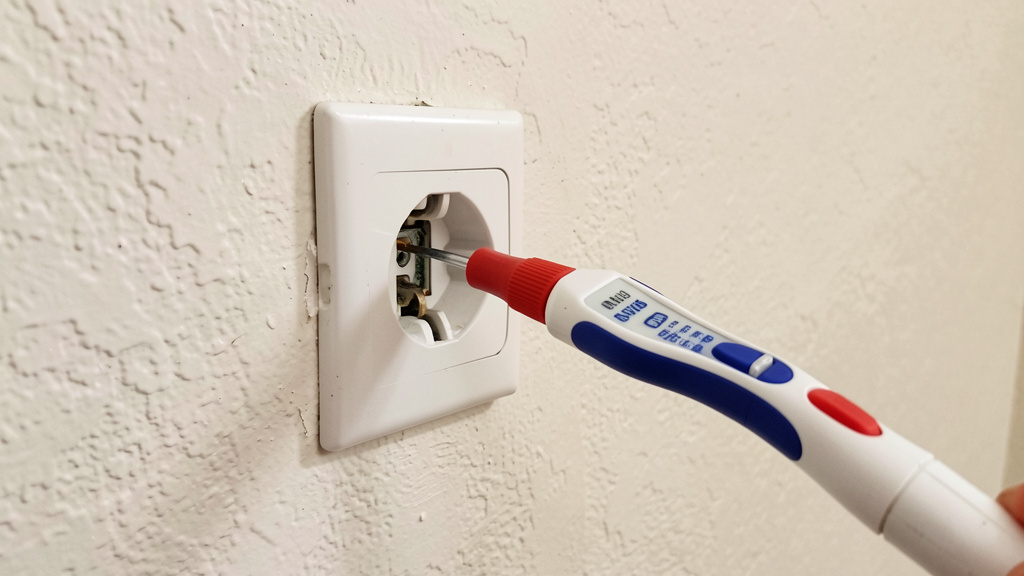
Learn to safely approach common electrical repairs with a structured framework focused on safety awareness, informed decision-making, and clear recognition of professional boundaries.
When an outlet loses power, a switch becomes unresponsive, or a light fixture behaves unpredictably, uncertainty is a natural and responsible reaction. These moments call not for haste, but for measured assessment grounded in safety principles. This guide provides clear, step-by-step protocols aligned with widely recognized electrical safety standards, detailed repair pathways for common household scenarios, and explicit guidance on when professional expertise is essential. Whether addressing a loose outlet in a living area or evaluating a flickering fixture, you’ll develop a methodical approach that prioritizes long-term safety over quick fixes.
Introduction
Electricity operates invisibly within our homes, enabling daily routines with quiet reliability. When that reliability falters—through a dead outlet, inconsistent switch operation, or unstable lighting—it’s appropriate to pause and assess. Questions like “Could this indicate a deeper issue?” or “Do I have the right knowledge and tools for this?” reflect prudent judgment, not hesitation. Electrical systems demand consistent respect, and informed action begins with understanding both capabilities and limits.
This resource is built upon foundational safety frameworks referenced in national electrical guidelines, Underwriters Laboratories (UL) safety protocols, and occupational safety practices. These standards exist not as bureaucratic formalities, but as accumulated knowledge designed to protect people and property. Before any hands-on step, internalize this principle: the most successful electrical intervention is one completed without incident, where safety verification precedes action at every stage. This guide progresses deliberately—from universal safety rituals applicable to all repairs, through specific component scenarios with contextual considerations, to unambiguous indicators requiring licensed professional involvement. The goal is not to encourage repair of every issue, but to cultivate discernment: knowing which tasks may be approached cautiously by a prepared homeowner, and which require expert assessment.
The Safety-First Framework: A Repeatable Protocol for Every Repair
Approach electrical work with the consistency of a pre-flight checklist. Pilots never skip verification steps regardless of experience; similarly, a standardized sequence transforms potential risk into controlled procedure. This four-phase framework—Preparation, Disconnection, Execution, Validation—forms a reliable backbone for any repair covered here. Each phase includes verification points and decision gates designed to prevent escalation of minor errors. This structure reflects protocols emphasized in electrical safety training materials and is intended to be internalized as a habitual practice.
Step 1: Preparation and Assessment – Context Before Contact
Thorough preparation prevents misdiagnosis and reduces in-the-moment uncertainty. Begin by documenting precise symptoms:
– Outlet: Completely dead? Intermittent? Warm to touch?
– Switch: No response? Delayed action? Audible buzzing?
– Fixture: Flickering consistently? Only with certain bulbs? Correlated with appliance use?
Map the circuit: Plug a test lamp into the affected outlet (or operate the switch), then systematically turn off breakers until power stops. Note all devices (outlets, lights) that lose power with that breaker—this defines the circuit scope. Photograph the existing setup before any disassembly. This visual reference is invaluable during reconnection, especially with older installations featuring non-standard wiring.
Essential Toolkit Checklist:
– Non-contact voltage tester (NCVT): Verify functionality before and after use on a known-live source.
– Digital multimeter: For confirming de-energization beyond NCVT capability (e.g., detecting phantom voltage).
– Insulated-handled screwdrivers (VDE-rated, 1,000V): Look for the double-triangle symbol (⊡).
– Needle-nose pliers and wire strippers: For precise wire handling without damaging conductors.
– Safety glasses and flashlight/headlamp: Critical for visibility and eye protection in confined boxes.
– Temporary circuit tags: Label breakers during testing (“Kitchen Circuit – TESTING”).
Environmental & Contextual Checks:
– Ensure the work area is dry. Avoid repairs during periods of high humidity or if moisture is present (e.g., after rain for outdoor fixtures).
– Confirm children and pets are secured away from the workspace.
– Verify local requirements: Many municipalities require permits for new circuits, panel modifications, or fixture additions—even for homeowner-performed work. A brief check of your building department’s website prevents future complications.
– Mentally walk through each step: breaker identification, verification process, wire handling. This cognitive rehearsal reduces hesitation during execution.
Preparation is not delay; it is the foundation of efficient, low-risk work. Skipping this phase often leads to extended downtime, incorrect parts, or overlooked hazards.
Step 2: Power Disconnection and Verification – The Critical Safety Gate
This phase contains the single most vital safety action: confirming de-energization at the point of work. Never rely solely on breaker position. Mislabelled panels, shared neutrals, or backfed circuits (from generators/solar) can maintain hazardous voltage. Follow this verified sequence:
- Isolate power: Turn off the identified breaker. For absolute certainty (especially with unfamiliar panels), shut off the main breaker.
- Tag the breaker: Place a visible “DO NOT OPERATE – WORK IN PROGRESS” tag over the handle.
- Initial verification: Test the device (outlet slots, switch terminals, fixture wires) with your NCVT. No indication? Proceed.
- Multimeter confirmation:
- Set to AC voltage (V~).
- Test between hot (black) and neutral (white), then hot and ground (bare copper).
- Critical nuance: Also test neutral to ground. A broken neutral may show 0V hot-to-neutral but retain dangerous voltage relative to ground.
- Tool validation: Immediately re-test your NCVT/multimeter on a known-live circuit to confirm the tool functioned correctly during verification.
If voltage is detected after breaker shutdown:
→ STOP. Do not proceed. This indicates a wiring anomaly requiring professional diagnosis. Document observations and contact a licensed electrician.
Verification is not distrust—it is disciplined precision. This “live-dead-live” protocol is emphasized in electrical safety resources for its proven role in preventing incidents.
Step 3: Execution with Precision – Methodical Connection
With power confirmed off, proceed deliberately. Support device weight when pulling from the box; never yank wires. Inspect all conductors before handling:
– Discard if: Insulation is brittle, cracked, discolored (brown/black indicating overheating), or shows corrosion (white/green powder).
– Handle push-in connections cautiously: Older “stab-in” outlets require depressing the release slot to remove wires. Recommendation: Avoid reusing push-in terminals. Screw terminals or pigtails provide more reliable long-term connections.
Connection Best Practices:
– Strip exactly ¾ inch of insulation. Excess bare wire risks shorting; too little reduces grip.
– Form clockwise hooks for screw terminals (tightening pulls wire securely).
– Tighten screws firmly until resistance increases—snug, not stripped. Perform a gentle tug test on each wire.
– For wire nuts: Match size to wire count/gauge (e.g., yellow for two #12 wires). Twist clockwise until fully encapsulated. No bare copper should be visible.
– Box fill awareness: Overcrowded boxes create heat buildup and stress connections. If adding wires (e.g., pigtailing), verify box capacity. When uncertain, install a box extender ring.
Component Selection Guidance:
– Outlets: Choose tamper-resistant (TR) models (required in most living areas per modern codes). “Spec grade” versions offer stronger internal components.
– Switches: For LED fixtures, select switches explicitly rated for LED loads with compatible min/max wattage ranges.
– GFCIs/AFCIs: Match replacement devices to existing protection type. Never bypass safety devices in required locations (bathrooms, kitchens, garages, outdoors).
Mount devices level using a small bubble level. Overtightening cracks mounting yokes; undertightening allows movement that loosens connections over time. Precision here supports both safety and user experience.
Step 4: Testing and Validation – Confirming Safe Operation
Restoring power requires structured validation:
1. Pre-energization check: Ensure no tools are in the box, wires are neatly folded, and cover plates are secure.
2. Initial power-on: Stand clear of the panel when flipping the breaker. Listen for unusual sounds (buzzing, popping) or smell for ozone/burning. If detected, shut off power immediately and consult a professional.
3. Functional test: Operate the device with a known-working lamp or appliance.
4. Safety device test: For GFCIs, press TEST (should trip), then RESET. For AFCI breakers, follow manufacturer test procedures.
5. Load test: Plug in a moderate-load device (e.g., lamp, phone charger) for 3–5 minutes. Lightly feel the faceplate—mild ambient warmth is normal; noticeable heat indicates a loose connection requiring re-inspection.
6. Documentation: Note the repair date, components replaced, and any observations (e.g., “slight discoloration on old neutral wire”). Update home electrical records if maintained.
Validation transforms completion into verified safety. If any test fails, return to Step 2 (disconnection) before re-examining connections. Patience here prevents recurrence, damage, or hazard.
The Fundamental Principle: Electrical safety is sustained through consistent verification, not assumed competence. Mastery lies in honoring the boundary between informed action and professional necessity.
Outlet Repairs and Replacements: Contextual Diagnosis and Action
Outlets experience frequent use and wear. Symptoms range from minor inconvenience to serious hazard. Always confirm the outlet isn’t switch-controlled before diagnosing “dead” status: plug in a lamp and test nearby wall switches.
Scenario 1: Replacing a Worn Standard Duplex Outlet
Why address this: Loose plug retention causes arcing (visible sparks), overheating, or intermittent power—potential fire precursors. Replacement is proactive maintenance.
Decision Path (DPC clair):
→ IF the outlet feels loose when plugging/unplugging devices OR shows discoloration on the faceplate…
→ THEN replacement is recommended, even if currently functional.
→ IF wires are brittle, corroded, or too short after trimming…
→ THEN discontinue work and consult a professional.
Adaptive Solutions (CAS adaptatif):
– Standard repair: Direct wire replacement using screw terminals.
– Overcrowded box: Install a box extender ring before remounting.
– Multi-wire circuit (split receptacle): Replicate the existing configuration exactly (top/bottom brass screws fed by separate hots). Photograph wiring before disconnecting.
Friction Points Addressed (FAS explicite):
– Reversed polarity: Always connect black (hot) to brass screws, white (neutral) to silver screws. Reversal creates shock risk.
– Insufficient wire length: If wires are too short for screw terminals after removing from push-in holes, create a pigtail (short extension wire joined via wire nut) only if box space permits.
– Persistent warmth after repair: Indicates loose connection. Power off and re-verify all terminals.
Scenario 2: Installing a GFCI Outlet for Enhanced Safety
Critical Context (TAI temporel): GFCIs are essential in areas with moisture exposure (kitchens, bathrooms, garages, basements, outdoors). Humidity or water contact significantly increases shock risk—making GFCI protection non-optional in these zones per modern electrical guidelines.
Pre-Installation Assessment:
– Identify LINE (power source) vs. LOAD (downstream protection) terminals. Miswiring compromises function.
– IF the circuit has two hot wires (black and red) sharing one neutral (multi-wire branch circuit)…
– THEN GFCI installation becomes complex. Consult a professional—do not proceed independently.
Adaptive Implementation Paths:
– Budget-conscious: Install one GFCI at the first outlet in the circuit (closest to panel). Connect downstream outlets to its LOAD terminals for whole-circuit protection.
– Ideal safety: Replace every outlet in the wet-location circuit with individual GFCIs. Eliminates dependency on a single device’s function.
– Uncertain wiring: Connect only LINE wires. Cap LOAD wires with wire nuts. This protects only the GFCI outlet itself—a valid safety upgrade.
Troubleshooting Guidance:
– Won’t reset: Verify power reaches LINE terminals. Unplug all devices on the circuit; a faulty appliance may cause persistent tripping.
– Nuisance tripping: Check for moisture in the box (dry thoroughly), faulty appliances, or shared neutral issues.
– No power downstream: Confirm LOAD wires are connected correctly per device diagram.
Scenario 3: Diagnosing a Dead Outlet Systematically
Dead outlets rarely fail in isolation. Follow this friction-focused diagnostic flow:
- Rule out simple causes:
- Test multiple devices in the outlet.
- Check all GFCIs in the home (kitchen, bathroom, garage, exterior). A tripped GFCI can disable outlets far from its location.
-
Inspect the breaker panel for tripped breakers (handle midway between ON/OFF). Reset firmly ONCE. If it trips again immediately, stop—do not reset repeatedly.
-
Circuit mapping:
-
With a helper, identify which breaker controls the outlet. Note all devices on that circuit.
-
Inspect upstream devices:
- Examine the last working outlet before the dead zone. Loose connections here commonly disrupt downstream power.
- IF multiple wires connect under one terminal screw…
-
THEN implement a pigtail: Join wires with a short pigtail using a wire nut; connect the pigtail to the outlet terminal. This reduces connection stress and heat buildup.
-
Material-Specific Warnings (EDQ contextuel):
- Aluminum wiring (homes built ~1965–1973): Silver-colored wires require specialized repair methods (COPALUM, AlumiConn). Do not attempt standard repairs. Contact a licensed electrician certified in aluminum wiring remediation.
- Knob-and-tube wiring: Cloth-insulated wires with ceramic knobs indicate obsolete, ungrounded systems. Professional evaluation is essential.
When to escalate: Burning smells, visible charring, or multiple dead outlets with no accessible fault point require professional diagnostic tools (thermal imaging, circuit tracers).
Switch Repairs and Upgrades: Understanding Control Systems
Switch failures often stem from internal contact wear or compatibility issues. Confirm the switch controls the intended light before disassembly.
Scenario 1: Replacing a Standard Single-Pole Switch
Wiring Identification Protocol:
– Two wires + ground: Standard single-pole. Terminals are interchangeable (both brass screws carry hot/load).
– Three wires + ground: May indicate a switch leg in older installations. Critical: With power ON (briefly, using extreme caution), use a multimeter to identify the constant-hot wire (shows ~120V to ground). Label clearly before disconnecting. The white wire may be used as a hot conductor—verify voltage; if hot, mark with black tape per safety guidelines.
Friction Point Resolution:
– No neutral wire in box: Many smart switches require a neutral. Forcing a neutral connection by tapping other wires creates hazards. Choose “no-neutral” compatible smart switches only after verifying bulb compatibility (some cause LED flickering). When uncertain, consult product specifications or seek professional advice.
– Warm faceplate or buzzing sound: Indicates loose connection or internal failure. Replace the switch.
Scenario 2: Upgrading to a Dimmer Switch
Compatibility Triad (SDI élevé):
1. Bulb type: Only use bulbs explicitly labeled “dimmable.” Non-dimmable LEDs flicker, buzz, or fail prematurely.
2. Dimmer specifications: Verify total circuit wattage falls within the dimmer’s min/max range. LED dimmers often require a minimum load (e.g., 10W); below this, flickering occurs.
3. Dimmer technology: Leading-edge (TRIAC) dimmers suit incandescent/halogen. Trailing-edge (ELV) dimmers are designed for low-wattage LEDs. Mismatch causes poor performance.
Adaptive Troubleshooting:
– Flickering at low levels: Consult the dimmer manufacturer’s online compatibility list. Try a different brand of dimmable LED bulbs.
– Audible buzz: Retighten connections; verify total wattage isn’t exceeding dimmer capacity.
– Switch feels hot: Turn off immediately. Recalculate total load. Upgrade to a higher-capacity dimmer if needed.
Scenario 3: Three-Way Switch Systems (Two Locations Control One Light)
Systemic Understanding (MAI systémique): Three-way systems involve two switches connected by traveler wires. Power flows from the panel to the “line” switch, through travelers, to the “load” switch, then to the light. Misidentifying terminals causes failure.
Diagnostic Protocol:
1. Confirm both switches have three terminals (one dark/common screw + two brass traveler screws).
2. Identify the power source location: With power ON (cautiously), find which switch box has a constant-hot wire (shows voltage to ground).
3. Label all wires: COM (common), T1, T2. If a white wire shows voltage, mark it with black tape immediately—it is being used as a hot conductor.
4. Verify traveler continuity: Power OFF. Use multimeter continuity mode between traveler wires at one switch while flipping the other switch. Beep should toggle with switch position.
Critical Boundary:
→ IF wire colors are non-standard or labels are missing…
→ THEN photograph existing wiring and consult a professional. Misconnecting a white traveler as a neutral creates a direct short circuit—a severe fire hazard.
→ Strong recommendation: Replace both switches simultaneously. Uneven wear in older pairs leads to recurring issues.
Light Fixture Repairs and Installations: Safety Meets Function
Always begin troubleshooting with the simplest element: the bulb. Replace with a known-working bulb of correct type and wattage (exceeding fixture rating causes overheating).
Scenario 1: Replacing an Existing Ceiling Fixture
Pre-Work Safety Checks:
– Weight assessment: Standard boxes support ≤50 lbs. For heavy fixtures (chandeliers, fans), verify the box is securely anchored to a joist. If the existing box wiggles or is plastic, install a fan-rated retrofit brace before mounting the new fixture.
– Wire condition: Brittle, cracked, or cloth-insulated wires indicate aging components. Replace the entire fixture assembly; do not splice degraded wires.
Installation Protocol:
1. Power OFF. Verify dead at fixture wires (black to white, black to ground).
2. Support fixture weight while disconnecting wires. Note connections: black (hot) to black, white (neutral) to white, ground to ground.
3. IF the electrical box is metal and lacks a ground wire…
THEN connect the fixture’s ground wire to the box’s grounding screw.
4. Mount securely. Install bulbs at or below the fixture’s labeled maximum wattage. For LEDs, actual wattage is low, but heat accumulation still matters—follow manufacturer guidance.
5. Post-installation test: Operate for 10 minutes. Check for flickering, buzzing, or excessive heat at the base.
Contextual Adaptation (TAI temporel):
– Sloped ceilings: Use the fixture’s adjustable mounting bracket. Ensure canopy seals tightly against the ceiling to prevent pest entry or drafts.
– High-humidity areas (bathrooms): Confirm fixture is rated for “damp” or “wet” locations per NEC Article 410.10. Dry-location fixtures risk internal corrosion and shock hazard.
Scenario 2: Adding a Fixture to an Existing Accessible Circuit
Feasibility Boundaries (RMI faible):
→ Only attempt if cable routing is fully accessible (unfinished basement, attic with clear path).
→ Never attempt to run cable inside finished walls without proper training, tools, and permits. Concealed wiring risks damaging existing infrastructure and creates hidden hazards.
Critical Pre-Checks:
– Circuit capacity: Total load (existing + new fixture) must not exceed 80% of circuit rating (e.g., ≤1,440W for a 15A circuit).
– Box placement: Use a stud finder. Install an “old-work” remodel box rated for the fixture weight.
– Permit requirement: Most jurisdictions require permits for new fixture installations. Verify with your local building department. Unpermitted work may affect insurance coverage.
When to choose professional installation: If routing requires drilling through multiple studs, navigating tight spaces, or working near plumbing/HVAC lines, licensed electricians possess specialized tools (fish tapes, flexible drill bits) to complete the task safely with minimal wall disturbance. This is prudent stewardship, not inability.
Scenario 3: Diagnosing Flickering or Intermittent Lighting
Systemic Diagnostic Tree (MAI systémique):
– Single fixture flickers:
→ Check bulb seating and type compatibility.
→ Inspect socket: Bent contact tab? Corrosion? (Clean gently with electrical contact cleaner; do not use abrasives).
→ Examine internal fixture wiring for brittleness.
– Multiple fixtures on one circuit flicker:
→ Indicates upstream issue: loose connection at first device on circuit, failing breaker, or shared neutral problem.
→ Inspect accessible boxes on that circuit (power OFF).
– Whole-house flickering:
→ Likely utility-side issue (loose service drop) or main panel problem. Contact your utility provider.
Immediate Action Triggers (FAS explicite):
→ IF flickering is accompanied by buzzing from walls/panel, burning smells, visible sparks, or scorch marks…
→ THEN turn off the circuit at the breaker immediately. Do not use. Contact a licensed electrician. These indicate arcing faults—a leading cause of electrical fires.
Advanced Troubleshooting: Navigating Complex Scenarios
Persistent issues require layered analysis. Document observations systematically: date/time, operating appliances, weather conditions, recent changes. Patterns emerge from data.
Mystery 1: GFCI Trips Repeatedly (No Load Plugged In)
- Moisture: Common in outdoor/garage outlets. Power OFF. Inspect for condensation, corrosion, or insect nests. Dry thoroughly. Replace if corrosion is severe.
- Shared neutral: If LOAD wires feed outlets on a different circuit sharing a neutral, current imbalance triggers tripping. Solution: Disconnect LOAD wires, cap them, and use GFCI for self-protection only. Install individual GFCIs at downstream locations.
- Fixture leakage: Disconnect outdoor lights/pumps. Test GFCI. If it holds, the fixture is the culprit.
Mystery 2: Outlet or Switch Feels Excessively Warm
- Loose connection: Primary cause. Power OFF. Re-secure all terminals and wire nuts.
- Overloaded circuit: Use a plug-in power meter to measure total draw. Redistribute high-wattage devices.
- Wire/breaker mismatch: Verify wire gauge matches breaker rating (#14 wire requires 15A breaker; #12 requires 20A). Mismatches are serious code violations requiring professional correction.
Mystery 3: Intermittent Power Loss on a Circuit
- Loose breaker connection: Panel work involves lethal voltages. Do not open the panel cover. Hire a licensed electrician to inspect and torque connections.
- Failing breaker: Symptoms include tripping under normal load, loose handle feel, or visible arcing marks. Replacement requires exact brand/type match.
- Rodent damage: Look for droppings or chewed insulation in accessible boxes. Concealed damage requires professional tracing.
Mystery 4: Persistent Buzzing or Humming
- Outlet/switch: Loose connection vibrating at 60Hz. Power OFF. Tighten terminals.
- Fixture: Incompatible dimmer/bulb or failing transformer (in low-voltage systems).
- Panel: Do not ignore. Indicates potential arcing at main connections. Contact an electrician immediately.
Diagnostic Journal Method: For elusive issues, maintain a log. This provides concrete data for professionals and prevents emotional “ghost chasing.” Electrical behavior follows physical laws—symptoms have identifiable causes.
Knowing Your Limits: Clear Boundaries for Professional Engagement
True electrical literacy includes recognizing when a task exceeds safe DIY scope. This section defines unambiguous triggers for licensed professional involvement. Ignoring these boundaries risks fire, electrocution, or voided insurance coverage.
Absolute Stop Signs: Cease Work Immediately
- Visible damage: Burn marks, melted plastic, charring on devices, wires, or inside the panel.
- Burning odors: Ozone (sharp/metallic) or overheated insulation (fishy/acrid smell). Turn off circuit. Do not use.
- Sparks, smoke, or arcing during operation. Evacuate if fire is present; call emergency services.
- Water exposure: Flooded areas with submerged components. Power off at main breaker. Assume damage requires replacement.
- Aluminum wiring: Silver-colored branch circuit wires (common in homes built 1965–1973). Requires specialized repair methods (COPALUM, AlumiConn) by certified professionals.
- Knob-and-tube wiring: Exposed ceramic insulators with cloth-covered wires. Fragile, ungrounded, and a fire hazard. Requires full evaluation by a professional.
- Main panel anomalies: Rust, scorch marks, breakers that won’t stay on, or buzzing from the panel enclosure. Panel work involves lethal voltages even with main breaker off.
High-Complexity Scenarios Requiring Professional Skill
- New circuit installation (running cable through finished walls, load calculations, permitting).
- Subpanel installation (feeder sizing, grounding electrode systems, main panel capacity assessment).
- Generator transfer switch installation (critical for preventing backfeed hazards to utility workers).
- Whole-house rewiring or service upgrades (e.g., 100A to 200A).
- Three-phase equipment (rare in residences; requires specialized knowledge).
The Boundary Assessment Framework
When uncertainty exists, ask:
1. Do I have the correct tools? (e.g., torque screwdriver for panel work, thermal camera). Guessing without tools is gambling.
2. Do I understand the underlying principle? If following steps without grasping why (e.g., LINE/LOAD on GFCIs), stop. Knowledge gaps lead to errors.
3. What is the consequence of failure? A miswired lamp socket may fail safely; a miswired bathroom GFCI could fail to prevent electrocution. Scale caution accordingly.
4. Is time pressure influencing judgment? “Need this fixed before guests arrive” clouds decision-making. Safety cannot be rushed.
5. Have I consulted authoritative sources? Cross-reference manufacturer instructions, electrical safety foundation resources, and local code requirements. If sources conflict, seek professional clarification.
Safety organizations emphasize that electrical incidents are preventable through informed choices. Choosing professional help for complex scenarios is an act of responsibility—not defeat. Licensed electricians carry insurance, maintain current code knowledge, and possess diagnostic tools unavailable to homeowners. When contacting an electrician:
– Describe symptoms precisely.
– Share troubleshooting already performed.
– Verify licensing, insurance, and warranty details.
– Request a written estimate and confirm permit handling.
This balanced approach—handling appropriate tasks with disciplined safety protocols while respecting professional boundaries—defines mature home stewardship.
Your Questions, Answered
Q: Is it legal for homeowners to perform their own electrical repairs?
A: Regulations vary significantly by location. In many U.S. jurisdictions, homeowners may perform work on their primary residence, but permits and inspections are often required for new circuits, panel modifications, or major renovations. Always contact your local building department before starting work. Unpermitted work can complicate home sales and may affect insurance coverage after incidents. When in doubt, obtain the permit—it validates safety compliance.
Q: How can I identify aluminum wiring?
A: Aluminum branch circuit wiring was commonly installed between approximately 1965 and 1973. To check: Turn off power at the breaker. Remove an outlet cover plate. If visible wires are silver-colored (not copper’s reddish-brown) and may have “AL” printed on insulation, aluminum wiring is likely present. Do not attempt standard repairs. Contact a licensed electrician certified in aluminum wiring remediation methods (COPALUM crimps or AlumiConn connectors).
Q: Can I replace a two-prong outlet with a three-prong grounded outlet?
A: Only if a valid ground path exists. Two-prong outlets typically indicate ungrounded circuits (common in pre-1960s homes). Installing a three-prong outlet without a ground wire is unsafe and violates electrical guidelines. Safe options: 1) Run new cable with a ground wire (typically requires professional installation). 2) Install a GFCI outlet labeled “No Equipment Ground” (permitted by code for shock protection in ungrounded circuits). Affix the included “GFCI Protected, No Equipment Ground” sticker. Note: This does not provide a true ground for surge protectors.
Q: Why does my circuit breaker trip repeatedly even with nothing plugged in?
A: This indicates a fault within the circuit wiring itself—not connected devices. Possible causes include a short circuit (hot touching neutral/ground), ground fault, or failing breaker. Turn off the breaker. Do not reset repeatedly. Contact a licensed electrician. They use specialized tools (insulation resistance testers) to locate concealed faults safely.
Q: Are push-in (“stab-in”) connections on outlets safe to reuse?
A: While permitted in some installations, push-in connections are generally discouraged by safety resources due to higher failure rates over time. Spring clips can loosen from thermal cycling, leading to arcing or overheating. For repairs, use screw terminals. If wires are too short after removal, create a pigtail only if box space permits—otherwise, consult a professional.
Q: How often should GFCI outlets be tested?
A: Test monthly by pressing the “TEST” button (power should cut off), then “RESET” to restore. Also test after electrical storms, power surges, or if the outlet feels warm. GFCIs can degrade silently over time (typical lifespan 10–15 years). Replace immediately if testing fails.
Q: Can a “dry location” rated fixture be installed in a bathroom?
A: No. Fixture location ratings are critical for safety:
– Dry location: Interiors not subject to moisture (bedrooms, living rooms).
– Damp location: Moderate moisture areas (covered porches, some bathroom zones away from shower/tub).
– Wet location: Direct water exposure (showers, tubs, uncovered outdoors).
Bathrooms require at minimum damp-location-rated fixtures. Within 3 feet of a shower/tub basin, wet-location rating is mandatory. Using an incorrect fixture risks internal corrosion, short circuits, and shock hazard.
Q: What is the key difference between circuit breakers and fuses?
A: Both protect against overloads and short circuits. Fuses contain a metal element that melts permanently during a fault, requiring replacement. Circuit breakers use electromechanical triggers to “trip” a switch, which can be reset. Modern panels use breakers; fuses are found in older systems. Critical: Never replace a fuse with a higher amperage rating (“overfusing”)—this defeats protection and creates fire risk.
Q: Why do my LED bulbs flicker when dimmed?
A: Flickering typically stems from incompatibility. Verify: 1) Bulbs are labeled “dimmable.” 2) Dimmer is explicitly rated for LED loads (check manufacturer’s compatibility list). 3) Total bulb wattage meets the dimmer’s minimum load requirement (often 10–25W for LEDs; a small incandescent “dummy load” may be needed if below spec). 4) Try a different brand of dimmable LEDs—driver circuits vary.
Q: How do I confirm if an outlet is on a dedicated circuit?
A: Turn off the suspected breaker. Test all other outlets and lights in the home. If only that outlet/appliance loses power, it is dedicated. Dedicated circuits are required for major appliances (refrigerator, microwave, AC unit) to prevent overloads. Never add additional outlets or devices to a dedicated circuit.
Q: Is it safe to perform electrical work during rainy or humid weather?
A: Avoid all electrical work during rain, high humidity, or if the work area is damp. Moisture drastically increases electrocution risk. For outdoor projects (e.g., porch light replacement), choose a dry day with low humidity. Always ensure hands are dry, stand on a dry surface (rubber mat preferred), and use tools with insulated handles.
Q: What should I do if I accidentally nick a wire while drilling?
A: 1) Stop immediately. 2) Turn off power to that circuit (or main breaker if unsure). 3) Do not touch exposed wires. 4) Assess: If only the outer cable sheath is damaged and inner insulation is intact, wrap securely with electrical tape rated for the voltage. If conductor insulation is damaged or copper is exposed, the cable requires professional repair—do not tape over damaged conductors. Concealed wall damage typically needs an electrician to splice within a junction box.
Conclusion: Cultivating Informed Stewardship
Electrical systems are foundational to modern home function—silent, essential, and deserving of respectful care. This guide has provided structured protocols for common outlet, switch, and fixture scenarios, emphasizing verification, precision, and contextual awareness. Equally vital is the clarity around boundaries: recognizing burn marks, aluminum wiring, panel anomalies, or complex circuit behaviors as definitive signals for professional engagement. True electrical literacy harmonizes actionable knowledge with humble recognition of limits.
Three enduring principles anchor safe practice:
1. Verification precedes action: Test, confirm, re-test. Never assume.
2. Precision prevents peril: Secure connections, appropriate materials, and mindful execution build lasting reliability.
3. Humility honors safety: Choosing professional help for complex scenarios protects what matters most—your household’s well-being.
The Preparation Pause
Before any repair beyond bulb replacement, implement a brief preparation interval. Use this time to review safety steps, gather correct tools, consult manufacturer instructions, and mentally walk through the process. This pause transforms uncertainty into preparedness and reinforces that electrical work rewards thoughtful readiness over haste.
The Broader Perspective
Each mindful repair contributes to your home’s long-term safety. Yet electrical systems evolve—codes update, technologies advance, infrastructure ages. Commit to ongoing awareness: note changes in your home’s electrical behavior, understand signs of aging systems, and share safety practices with household members. Teach children why outlet covers matter. Explain why GFCI testing is routine. When electrical safety becomes a shared household value, its protective impact multiplies.
You hold the capacity to maintain your home with care and discernment. Proceed with verification. Respect boundaries. Prioritize safety above speed. And when questions arise, choose the path that safeguards everyone within your walls. That choice illuminates true home stewardship.
Explore Our Complete Home Electrical System:
Understanding Your Home’s Electrical Panel | GFCI vs. AFCI: Protection Explained | Smart Switch Compatibility Guide | Essential Electrical Safety Toolkit | Recognizing Signs Your Home Wiring Needs Upgrading | Outdoor Fixture Installation Safety | Flickering Lights: Diagnostic Flowchart